
Short answer: Sometimes, but not with homeopathic remedies. Nasal polyps can shrink with proven medicines, mainly steroid nasal sprays, so surgery is not always the first step. There is no good evidence that homeopathy shrinks polyps. If your nose has been blocked for 12 weeks or more, see an ENT specialist for an evaluation.
Medically reviewed by Dr. Prashanth R. Reddy, ENT Surgeon. Last reviewed: 08 November 2026.
Key takeaways
- Nasal polyps are soft, painless swellings in the lining of the nose and sinuses, linked to long-term inflammation.
- First-line medical treatment is a steroid nasal spray; surgery is considered when medicines are not enough.
- A systematic review found very limited evidence for complementary medicine in chronic sinus disease.
- Blocked for 12+ weeks, fading smell or one-sided blockage deserve an examination, not another remedy.
What are nasal polyps?
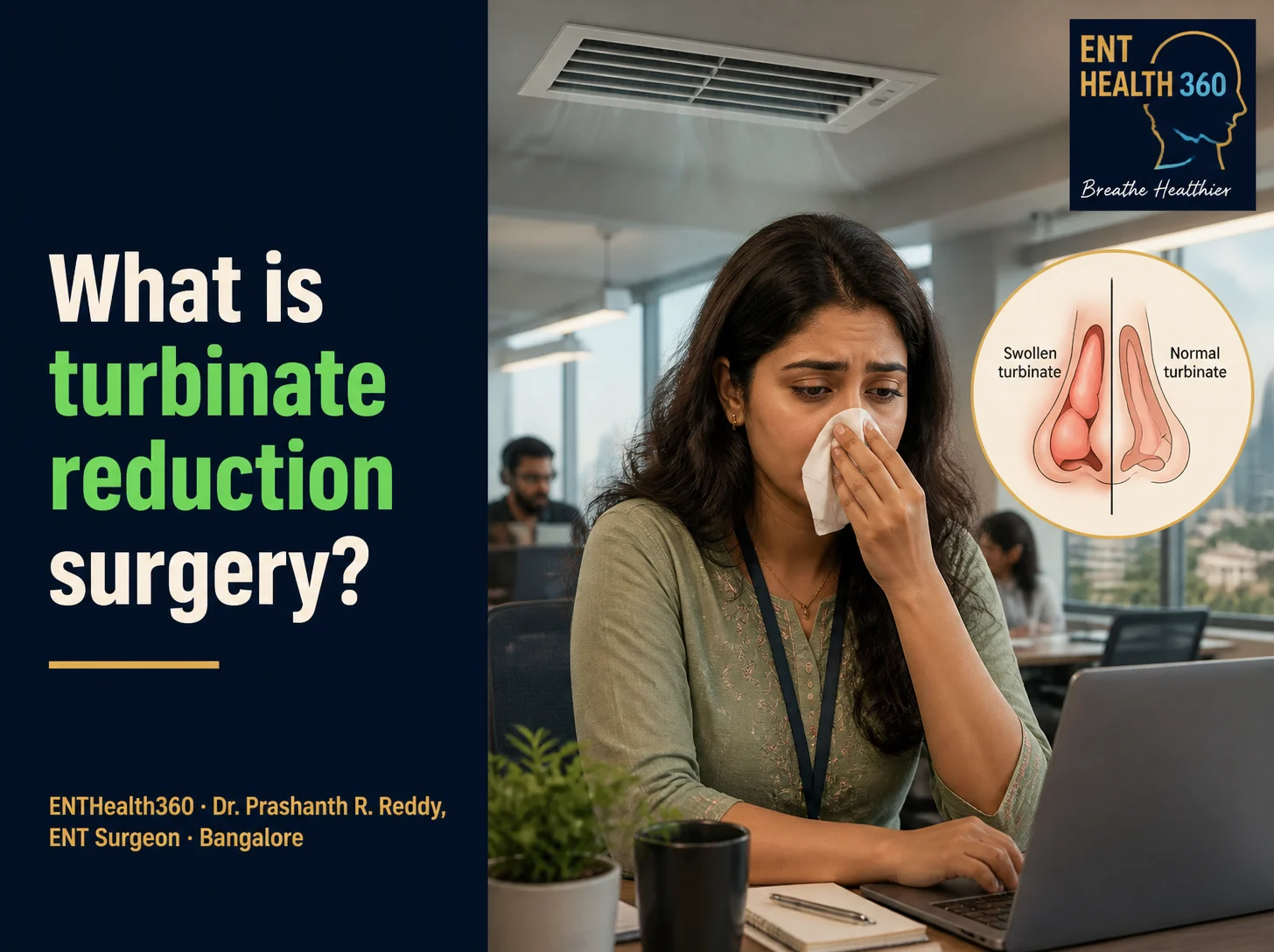
Nasal polyps are soft, teardrop-shaped swellings that grow from the lining of the nose and sinuses. They are not cancer. They are linked to long-term (chronic) inflammation, often together with allergy, asthma or chronic sinusitis.
Small polyps may cause no symptoms. Larger ones can block airflow, which is why people notice a stuffy nose, reduced smell, a runny nose or post-nasal drip, and pressure in the face.
Is the viral claim true? Can polyps be treated without surgery?
A widely shared social media reel, viewed more than five million times, presents a homeopathic remedy for nasal polyps without surgery. Here the claim has two parts, and they deserve different answers.
Treatment without surgery: partly true. The European Position Paper on Rhinosinusitis and Nasal Polyps (EPOS 2020) supports topical steroid sprays as part of medical treatment for chronic rhinosinusitis with nasal polyps. A Cochrane review (Chong et al., 2016) found that intranasal steroids improve symptoms, with a moderate benefit for nasal blockage; most of its evidence came from people with nasal polyps. The same review found nosebleeds were more likely with steroid sprays.
Homeopathic remedies: insufficient evidence. A systematic review of complementary and alternative medicine in chronic rhinosinusitis concluded that evidence supporting its use is very limited. That is not proof that every remedy fails. It means no one has shown, in good trials, that they work for polyps. Waiting months on an unproven remedy can mean the problem is examined later.
| Approach | What the evidence says |
|---|---|
| Steroid nasal spray | First-line; improves blockage (Cochrane 2016; EPOS 2020) |
| Saline rinses | Commonly advised alongside medicines to keep the nose clean |
| Homeopathic or herbal remedies | Very limited evidence in chronic sinus disease |
| Endoscopic sinus surgery | Considered when medicines have not been enough |
What are the symptoms and how can you self-check?
Three simple checks can tell you when it is time to be examined:
- Blocked or stuffy nose lasting more than 12 weeks
- Smell and taste fading
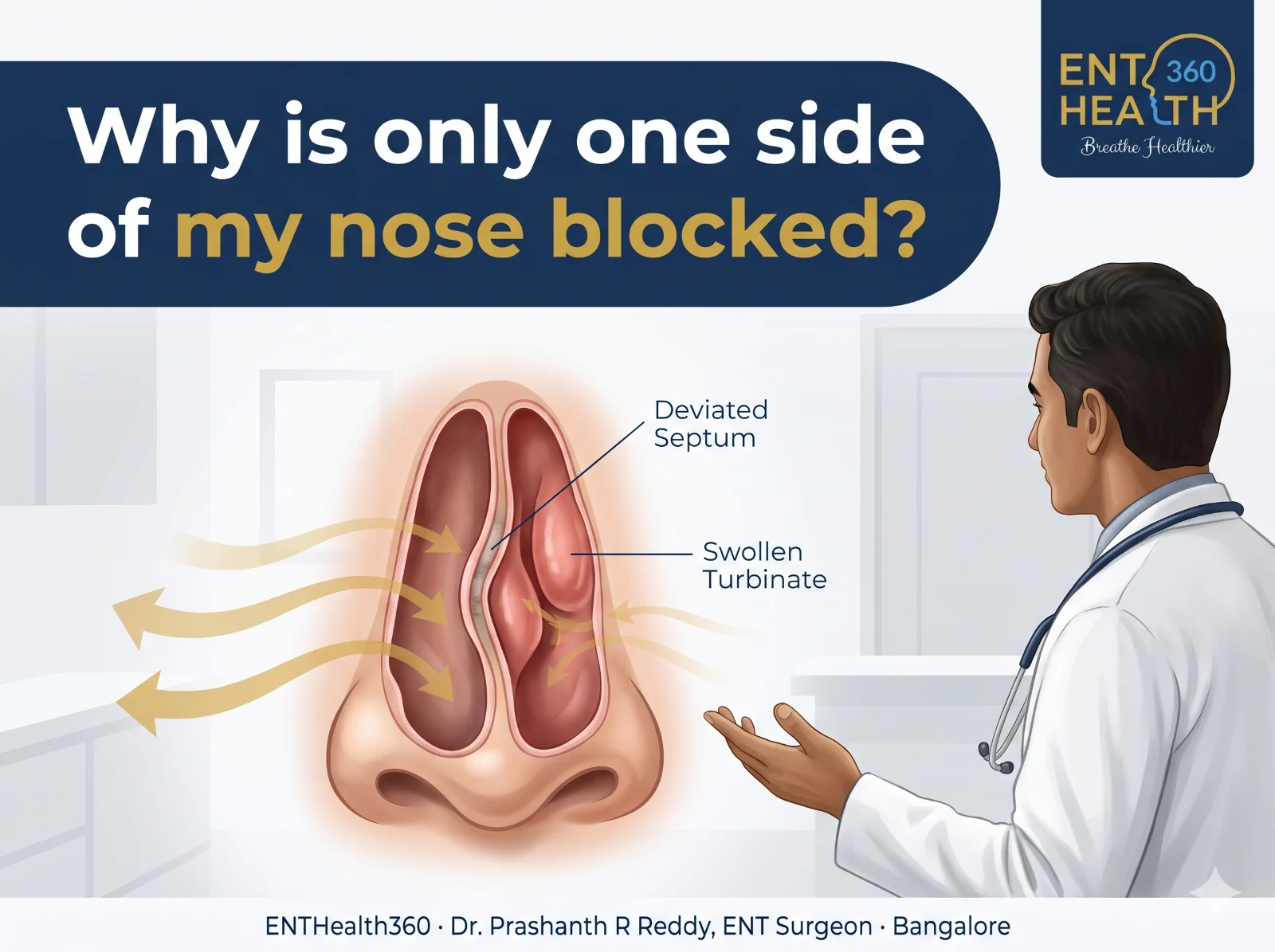
- Pressure in the face, or one side always blocked
Snoring or mouth breathing at night can also come from a blocked nose, which is one reason an ENT evaluation of the nose is a sensible first step for snoring.
Which home care is safe, and which is not?
Gentle saline rinses with clean, boiled-and-cooled or distilled water are generally safe and may ease crusting. Steam can feel soothing but does not shrink polyps.
Be careful with anything put into the nose that is not prescribed: unregulated drops, powders and oils can irritate the lining. Using a decongestant spray for long periods can make blockage worse. The bigger risk of home treatment is delay, because swelling that needs a proper look goes unexamined.
When should you see an ENT?
See an ENT specialist for an evaluation if:
- Your nose has been blocked for 12 weeks or more
- You are losing your sense of smell
- Only one side is blocked, especially with pressure or blood-stained discharge
- You have repeated sinus infections, or asthma that has become harder to control
Seek urgent care for swelling around the eye, vision changes, a severe headache with fever, or a stiff neck.
How does an ENT diagnose nasal polyps?
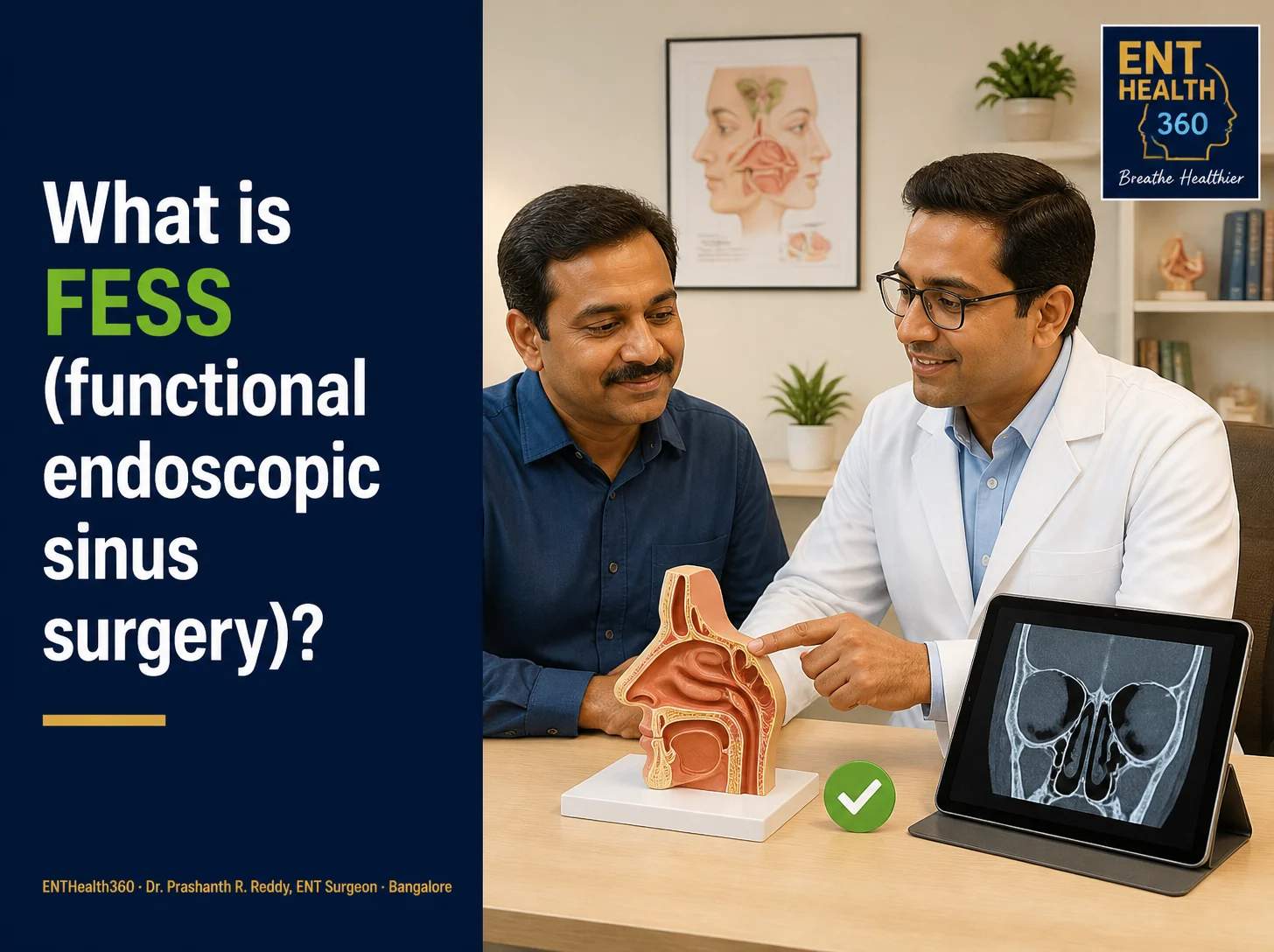
The evaluation starts with a conversation about your symptoms, allergies, asthma and past treatment. Then the nose is examined with a thin camera (nasal endoscopy), a brief clinic procedure. If more detail is needed, a CT scan shows how far the swelling extends into the sinuses.
In my clinic, many people tell me they have tried several remedies for months before anyone looked inside the nose. An endoscopic look usually answers the question in a few minutes.
What are the treatment options?
Options are explained step by step, and the choice depends on what is found:
- Steroid nasal sprays and saline rinses: the usual first step.
- Other medicines: short courses of oral steroids or allergy treatment in selected cases, decided by the doctor.
- Newer targeted therapies: considered for selected people with severe disease.
- Endoscopic sinus surgery: considered when medicines are not enough, to open blocked drainage pathways. Polyps can recur, so follow-up care matters.
Nasal polyp care in Bengaluru
Dr. Prashanth R. Reddy sees patients at Sakra World Hospital, Marathahalli, and at the Koramangala clinic. You are welcome to book an evaluation if your symptoms match the checks above.
Frequently asked questions
Can nasal polyps go away on their own? Rarely. Because they are linked to ongoing inflammation, they usually need treatment to shrink or to stay under control.
Do homeopathic medicines remove nasal polyps? There is no good evidence that they do. A systematic review found very limited evidence for complementary medicine in chronic sinus disease.
Are nasal polyps cancerous? No. Nasal polyps are benign. One-sided swelling or bleeding should still be examined to rule out other causes.
Do steroid nasal sprays work for polyps? Evidence from a Cochrane review suggests they improve nasal blockage, with nosebleeds as a possible side effect.
Will I definitely need surgery? No. Many people are managed with medicines. Surgery is considered when medicines have not been enough.
Can polyps come back? Yes, they can recur, which is why regular follow-up and continued medical treatment are often advised.
Can nasal polyps affect sleep? A blocked nose can cause mouth breathing and snoring. If you also snore, mention it during your ENT evaluation.
References
- Fokkens WJ, Lund VJ, Hopkins C, et al. European Position Paper on Rhinosinusitis and Nasal Polyps 2020. Rhinology. 2020;58(Suppl S29):1-464. PubMed
- Chong LY, Head K, Hopkins C, Philpott C, Schilder AGM, Burton MJ. Intranasal steroids versus placebo or no intervention for chronic rhinosinusitis. Cochrane Database Syst Rev. 2016;(4):CD011996. Cochrane
- Complementary and Alternative Medicine in Chronic Rhinosinusitis: A Systematic Review and Qualitative Analysis. PubMed 30482029
About the author
Dr. Prashanth R Reddy is an ENT surgeon at ENTHealth360, Bangalore (MS ENT; MBA, IIM Bangalore; Seoul Rhinoplasty Fellowship), seeing patients at Sakra World Hospital, Marathahalli and in Koramangala. His practice focuses on nasal headaches, snoring and sleep-disordered breathing.
Related reading: Is Ayurvedic or homeopathic treatment effective for sinus? · How do I know if I have sinus problems?
If your nose has been blocked for weeks, you are welcome to book an ENT evaluation at ENTHealth360.
For educational purposes only. Not a substitute for medical advice. Please consult a qualified ENT specialist.
General patient education. An individual consultation is needed to assess your symptoms and treatment options.