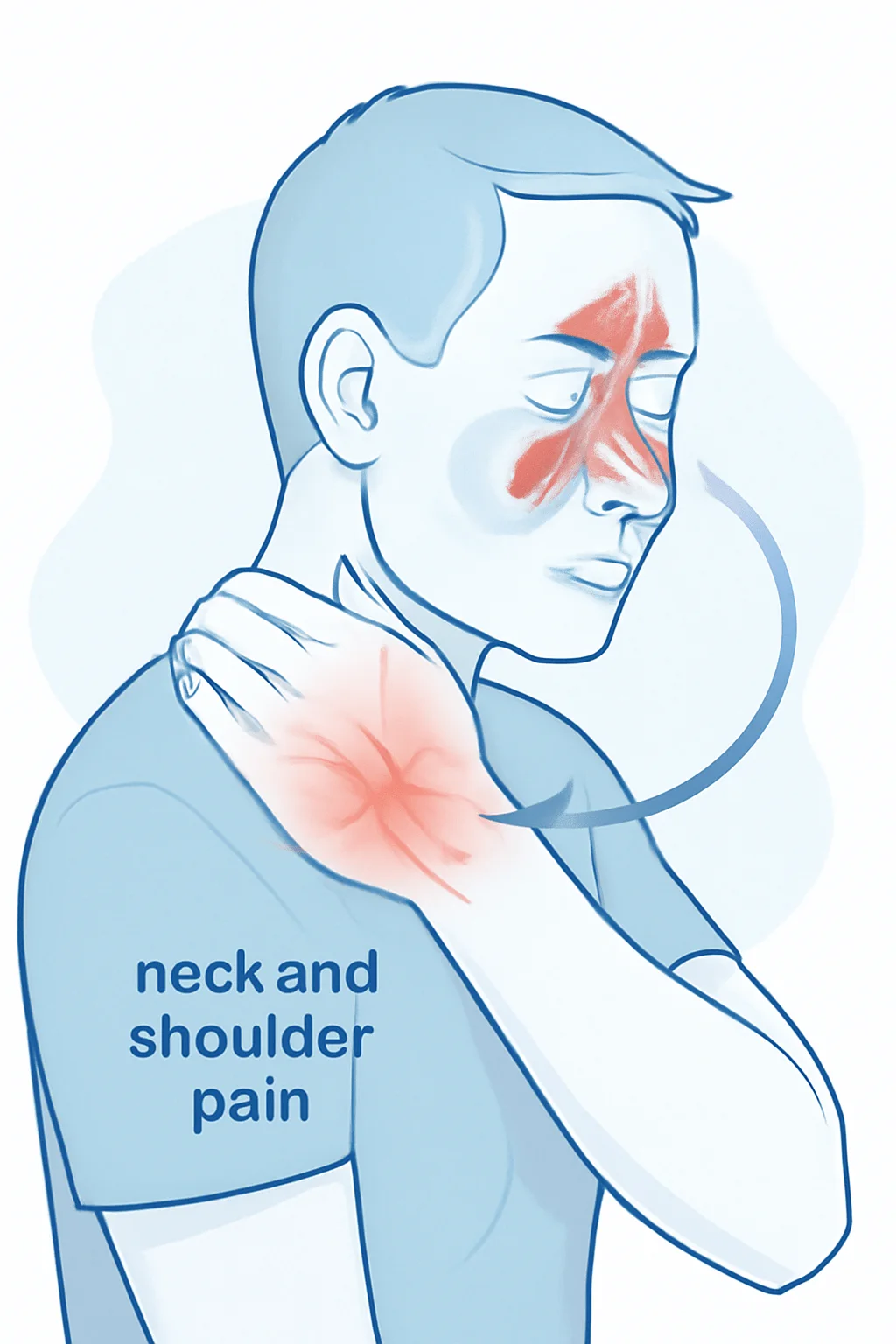
Do you suffer from constant nasal blockage and also experience recurring back pain?
You’re not alone—and surprisingly, the two might be more connected than you think. At first glance, your nose and your spine may seem like distant systems, but in reality, nasal obstruction can contribute to:
- Chronic posture problems
- Poor sleep
- Muscle tension
All of which can lead to back discomfort.
🔄 The Vicious Cycle: How a Blocked Nose Affects Your Back
1. Mouth Breathing & Forward Head Posture
- Blocked nose → mouth breathing
- Mouth breathing → forward head posture
- This shifts the natural spinal curve, especially in the cervical and thoracic spine
- Over time, it leads to neck stiffness, shoulder tension, and upper/mid-back pain
2. Interrupted Sleep & Poor Muscle Recovery
- Nasal obstruction disturbs deep sleep and REM cycles
- Poor sleep affects muscle recovery and tissue repair
- Result? Muscle fatigue, inflammation, and lower back pain
3. Reduced Oxygen = More Muscle Strain
- Blocked nasal passages = lower VO₂ max
- Your muscles get less oxygen, so they tire faster
- Back muscles overcompensate, especially during physical activities
- This leads to tension, tightness, and pain
4. Stress Response and Muscle Tightness
- Difficulty breathing triggers the sympathetic nervous system (fight-or-flight mode)
- Chronic stress → muscle clenching, especially in the neck, shoulders, and spine
- This adds to overall back strain
🧠 Real-Life Signs This Might Be Happening to You:
- You wake up with a dry mouth or sore throat
- You snore or have disrupted sleep
- You notice a slouched or forward head posture
- You feel tightness between your shoulder blades or dull back aches without any specific injury
✅ What You Can Do:
1. Get Your Nasal Block Evaluated
Common causes include:
- Deviated nasal septum (DNS)
- Turbinate hypertrophy
- Chronic allergies
👉 An endoscopic nasal exam by an ENT can help you find the exact cause.
2. Train for Nasal Breathing
- Try Buteyko breathing exercises
- Use saline rinses, steam inhalation, or anti-allergy sprays
- These support better oxygenation and reduce stress on your spine
3. Correct Your Posture
- Use lumbar support when sitting
- Practice chin tucks and shoulder blade retractions
- Stretch your back and neck muscles regularly
4. Consider Surgical Options
If structural issues like DNS or turbinate swelling are persistent: ✅ Minimally invasive nasal surgery can restore airflow, improve sleep, and ease back strain.
👨⚕️ When to Consult an ENT Specialist
If you’ve been dealing with both chronic nasal obstruction and nagging back pain, especially alongside poor sleep—
A blocked nose may be silently draining your energy and misaligning your spine.
General patient education. An individual consultation is needed to assess your symptoms and treatment options.