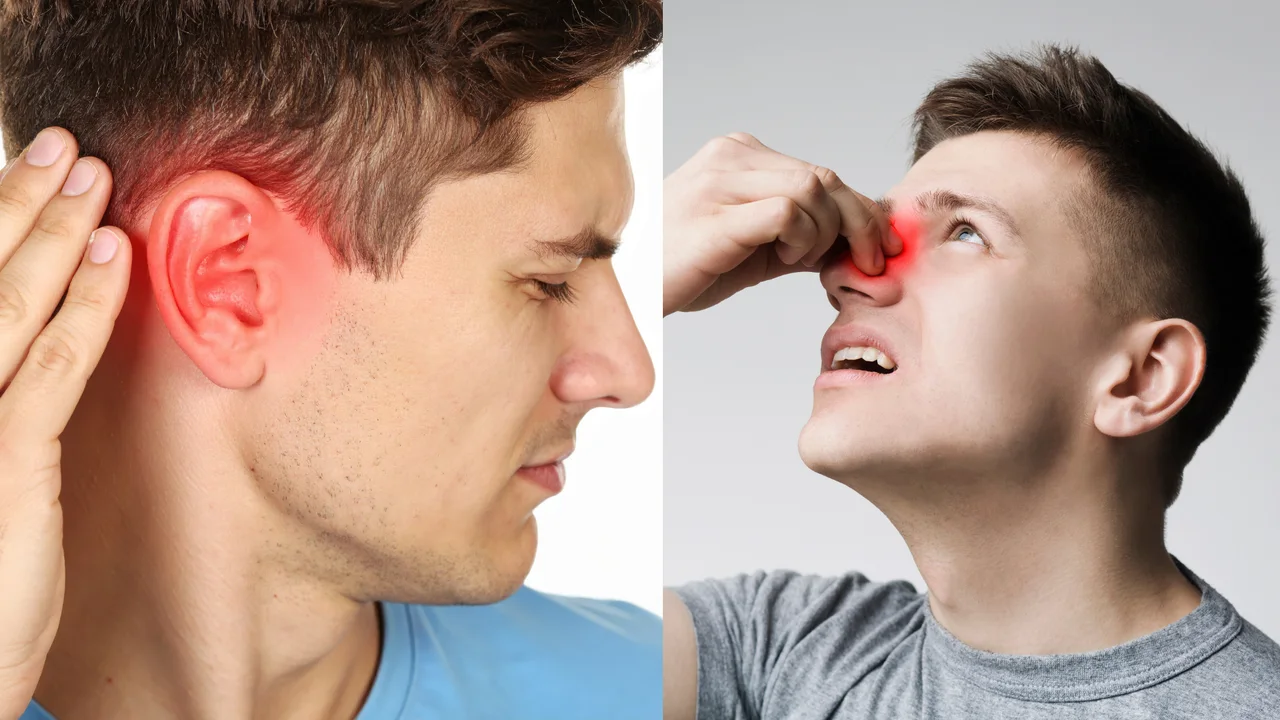
Understanding Eustachian Tube Catarrh and Its Surprising Connection to Nose Block and Acid Reflux
Have you ever experienced a dull ear pressure, mild hearing loss, or popping sensations in your ears that just won’t go away?
It might not be just earwax or a passing cold—you could be dealing with Eustachian Tube Catarrh: a commonly overlooked condition that links the ear, nose, and even your digestive system.
Let’s break down what’s happening—and what you can do about it.
🦻 What is Eustachian Tube Catarrh?
Your Eustachian tubes connect the middle ear to the back of your nose. They help equalize pressure and drain mucus and fluid.
When these tubes become inflamed or clogged with mucus (catarrh), they stop functioning properly, causing:
- A sensation of fullness or blockage in the ear
- Muffled hearing
- Clicking or popping sounds
- Imbalance or mild dizziness
👃 How Nasal Blockage Contributes
If you have nasal obstruction from allergies, a deviated septum (DNS), sinusitis, or enlarged adenoids, this can:
- Cause postnasal drip and mucus buildup
- Increase nasal pressure
- Push secretions backward toward the Eustachian tube
- Trigger chronic inflammation of the tube lining
Many patients with nasal blockage don’t realize their breathing is abnormal—until symptoms like ear fullness or pressure worsen.
🔥 The Hidden Culprit: Laryngopharyngeal Reflux (LPRD)
LPRD, or silent acid reflux, is a condition where stomach acid flows upward toward the throat and nose—without heartburn.
It can:
- Irritate the back of the nose and throat
- Trigger inflammation near the Eustachian tube opening
- Cause thick mucus that clogs the tubes
- Lead to chronic ear symptoms, especially in combination with nasal block
Common signs of LPRD include frequent throat clearing, postnasal drip, or a lump-in-the-throat sensation.
👩⚕️ Symptoms You Shouldn’t Ignore
You might be dealing with Eustachian Tube Catarrh if you have:
- Frequent ear block or popping
- Difficulty hearing during colds or allergies
- Constant mucus in your throat
- Throat clearing or hoarseness
- Worsening of symptoms after eating or lying down
✅ What You Can Do
1. Treat the Nasal Blockage
- Use nasal saline sprays and steam inhalation
- Manage underlying DNS, sinusitis, or turbinate hypertrophy
- Control allergies with antihistamines or nasal steroids
2. Manage LPRD (Silent Acid Reflux)
- Avoid acidic, spicy, oily foods
- Don’t lie down immediately after meals
- Elevate the head of your bed
- Use reflux medications under medical supervision
3. Consult an ENT Specialist
- A nasal endoscopy and ear pressure assessment can confirm the diagnosis
- Treatments like balloon eustachian tuboplasty or nasal correction surgery may offer long-term relief
👨⚕️ A Word from Dr. Prashanth R. Reddy
🏥 When Should You Seek Help?
Consider seeing an ENT if:
- You’ve tried home remedies with no lasting relief
- Symptoms are interfering with daily life
- You’re experiencing hearing changes, imbalance, or frequent colds/sinusitis
🌿 Bottom Line
Eustachian Tube Catarrh isn’t just about ear discomfort. It’s a multi-system issue that may start in your nose—or your stomach.
The good news? With proper evaluation and a personalized treatment plan, you can breathe better, hear clearly, and sleep more peacefully.
General patient education. An individual consultation is needed to assess your symptoms and treatment options.