Short answer: Partly true. Decongestant nasal sprays such as xylometazoline and oxymetazoline can open a blocked nose within minutes, but used for more than 5 days in a row they can cause rebound blockage, called rhinitis medicamentosa. In April 2026 the UK medicines regulator cut the advised limit from 7 days to 5. If you need a spray every night, the cause underneath deserves an ENT check.
Key takeaways
- Decongestant sprays work by shrinking swollen blood vessels in the nasal lining, which is why relief feels almost instant.
- A Cochrane review of 15 studies (1,838 participants) found repeated doses gave only a small, short-term improvement in congestion during colds, with low-quality evidence (Deckx et al., 2016).
- The UK MHRA now advises using these sprays for no more than 5 consecutive days, because overuse can cause rebound congestion, rhinitis medicamentosa and a weaker response to the spray (MHRA Drug Safety Update, April 2026).
- Do not stop suddenly on your own after weeks of use. Stepping off gradually, with a doctor's guidance, is usually easier.
- A nose that blocks every night often has a reason underneath: a deviated septum, enlarged turbinates, allergy, polyps or sinus disease.
What is rhinitis medicamentosa?
Rhinitis medicamentosa means a blocked nose caused by the medicine meant to unblock it. Decongestant sprays tighten the small blood vessels in the lining of the nose. When the effect wears off, the lining can swell back, sometimes more than before. People spray again, the relief lasts a shorter time, and a cycle begins. The MHRA describes three linked problems with overuse: rebound congestion, rhinitis medicamentosa (a longer-lasting congestion with visible changes in the nasal lining) and tachyphylaxis, where the spray simply works less well.
In Bengaluru clinics this pattern is familiar. These sprays are easy to buy at a pharmacy, they work fast, and many people keep a bottle at the bedside for months without realising the spray itself may be part of the problem.
Is the "magic nasal spray" claim true?
A TikTok clip calling decongestant spray "magic but also evil" has been viewed more than 700,000 times. Both halves of that claim are partly right.
The "magic" part: these sprays do reduce swelling quickly, and short courses are a reasonable option for a cold or acute sinusitis. The Cochrane review, however, found the measured benefit in colds was small and the evidence was low quality, so the relief people feel is real but modest.
The "evil" part: the problem is duration, not the spray itself. The MHRA's April 2026 update reduced the maximum from 7 to 5 consecutive days for adults and children aged 12 and over, and noted that most people who become reliant recover within about 3 months once they stop, with severe cases sometimes needing surgery.
There is honest uncertainty here. A 2013 review by a French ENT society panel (Mortuaire et al.) argued that much of the "rebound" may actually be the original rhinosinusitis returning, and questioned how often true drug-induced damage occurs. Regulators have nonetheless taken the cautious route, and in clinical practice the safest advice is the same either way: keep decongestant use short, and look for the underlying cause if the blockage keeps coming back.
Symptoms: a quick self-check
Your spray may be keeping your nose blocked if:
- You have used it for more than 5 days in a row.
- You need it more often than when you started, or each dose wears off faster.
- You cannot fall asleep without it.
- The cold ended weeks ago but the blockage did not.
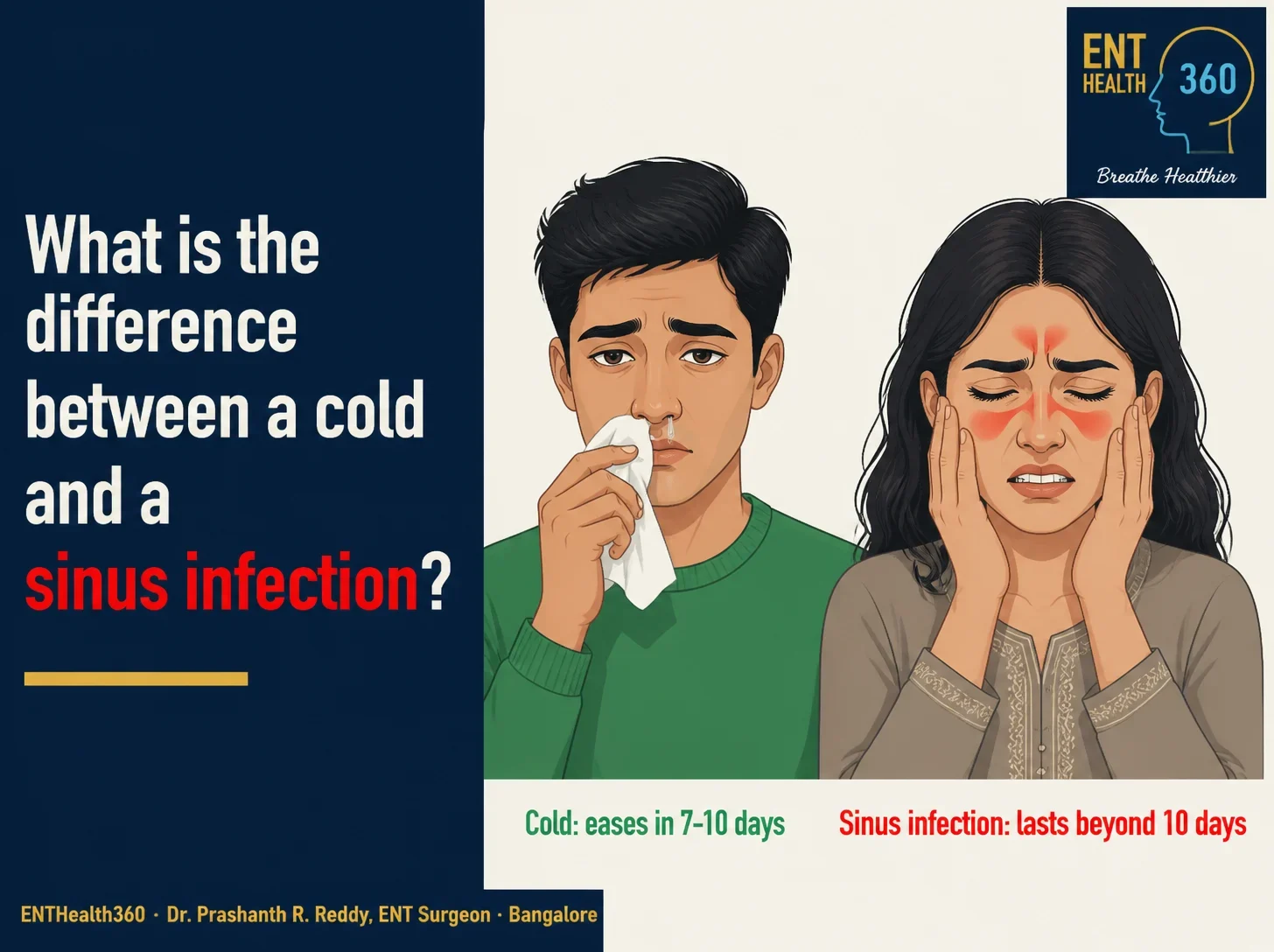
Signs that point to a cause underneath include one side of the nose being blocked most of the time, snoring or waking with a dry mouth, seasonal sneezing and itching, a reduced sense of smell, or facial pressure.
Safe vs unsafe home care
| Approach | What the evidence and guidance say | Bottom line |
|---|---|---|
| Decongestant spray for a few days | Small short-term benefit in colds (Cochrane 2016); MHRA limit of 5 consecutive days | Reasonable short term, if you follow the label |
| Decongestant spray every night for weeks | Risk of rebound congestion and rhinitis medicamentosa (MHRA 2026) | Avoid; speak to a doctor |
| Stopping abruptly after long use | MHRA notes abrupt stopping can make symptoms worse | Better done gradually, with guidance |
| Saline spray or rinse | Does not cause rebound congestion | Safe for daily use |
| Combining with oral decongestants | MHRA advises against combining with other sympathomimetic decongestants | Avoid without medical advice |
When to see an ENT
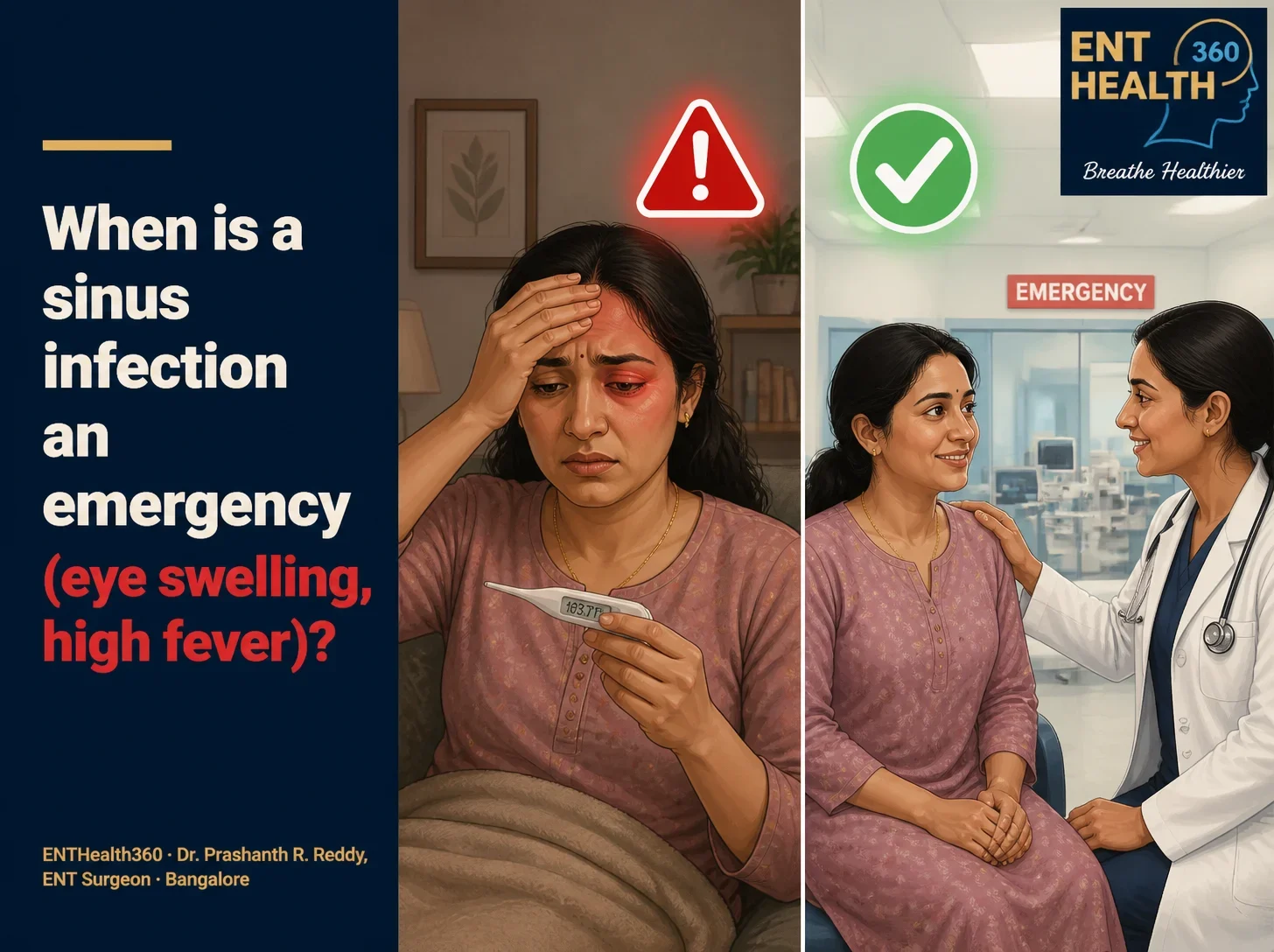
See an ENT specialist if you have used a decongestant spray for longer than 5 days and cannot stop, if your nose blocks most nights, if one side is always worse, or if you snore and wake unrefreshed. Seek prompt medical attention for swelling around the eye, changes in vision, a severe headache, or bleeding that will not settle.
How an ENT diagnoses it
An evaluation usually starts with a conversation: which spray, how long, how often, and your sleep, snoring and allergy history. The doctor then examines the nose and often performs a nasal endoscopy, a thin camera used in the clinic, usually after a numbing spray. This shows the septum, the turbinates and the sinus openings directly. Allergy testing or a CT scan is arranged only when the findings call for it.
In my clinic, the question I find most useful is not "how do I stop the spray?" but "why did the nose need it in the first place?" Answering that is what makes stepping off the spray stick.
Treatment options
- Guided withdrawal: stopping the decongestant gradually, with a plan your doctor tailors to you.
- Supportive care: saline sprays or rinses, and other medicines such as steroid nasal sprays or allergy treatment if your doctor feels they are suitable.
- Treating the cause: managing allergy, sinus disease or polyps where present.
- Surgery, only if needed: when a structural cause such as a deviated septum or enlarged turbinates persists, procedures like septoplasty or turbinate reduction may be discussed, with risks and recovery explained so you can decide.
Blocked nose and spray-dependence care in Bengaluru
Dr. Prashanth R. Reddy sees patients with long-standing nasal blockage, including those who depend on decongestant sprays, at Sakra World Hospital, Marathahalli and at his Koramangala clinic. An evaluation focuses on finding the cause and building a realistic plan to step off the spray.
Frequently asked questions
How many days can I safely use a decongestant nasal spray? The UK MHRA advises no more than 5 consecutive days for xylometazoline or oxymetazoline sprays (April 2026). Always follow your product label and your doctor's advice.
Can nasal spray make a blocked nose worse? Decongestant sprays can, if used for longer than recommended. This is called rebound congestion or rhinitis medicamentosa. Saline and steroid sprays do not cause rebound in the same way.
Should I stop my nasal spray suddenly? After long use, stopping abruptly can make the blockage worse for a while. It is usually easier to step off gradually with a doctor's guidance.
How long does rebound congestion take to settle? According to the MHRA, most people recover within about 3 months of stopping, though this varies from person to person.
Is a steroid nasal spray the same as a decongestant spray? No. Steroid sprays reduce inflammation slowly over days and are used for allergy and chronic rhinitis; decongestant sprays shrink blood vessels within minutes and are meant for short-term use.
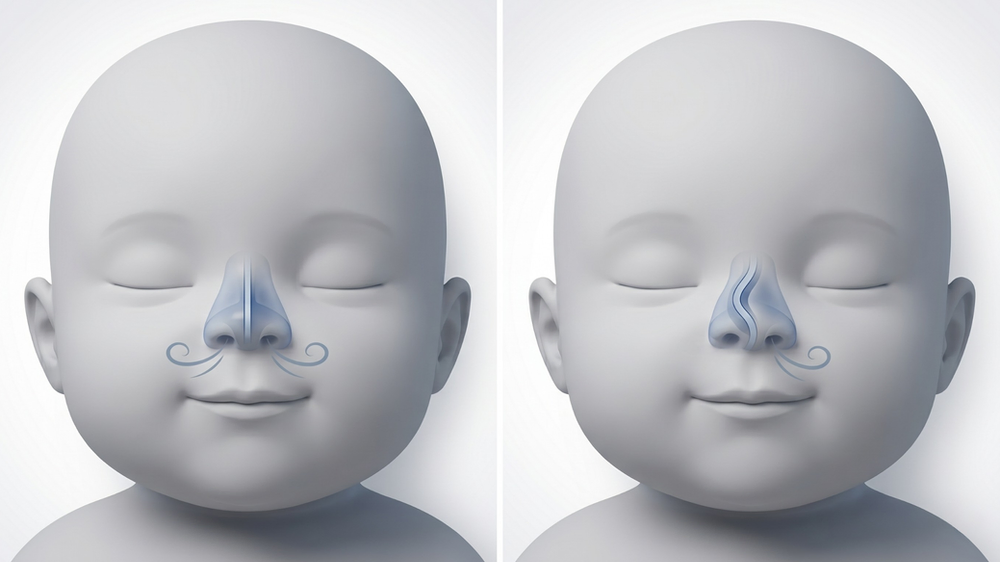
Can a deviated septum make me depend on nasal spray? It can contribute. A bent septum or enlarged turbinates can leave one or both sides narrow, so people reach for a spray every night. An ENT examination can tell whether this is part of the picture.
References
- MHRA. Nasal decongestant sprays and drops containing xylometazoline hydrochloride / oxymetazoline hydrochloride: increased risk of rebound congestion, rhinitis medicamentosa and tachyphylaxis with overuse. Drug Safety Update, 30 April 2026. gov.uk
- Deckx L, et al. Nasal decongestants in monotherapy for the common cold. Cochrane Database of Systematic Reviews, 2016 (CD009612). cochrane.org
- Mortuaire G, et al. Rebound congestion and rhinitis medicamentosa: nasal decongestants in clinical practice. European Annals of Otorhinolaryngology, Head and Neck Diseases, 2013;130(3):137–144. em-consulte.com
- The Pharmaceutical Journal. Nasal decongestant spray use limited to five days, May 2026. pharmaceutical-journal.com
About the author
Dr. Prashanth R Reddy is an ENT surgeon at ENTHealth360, Bangalore (MS ENT; MBA, IIM Bangalore; Seoul Rhinoplasty Fellowship), seeing patients at Sakra World Hospital, Marathahalli and in Koramangala. With more than 20 years in practice, his work focuses on nasal breathing, sinus disease and snoring, and how nasal breathing affects sleep, energy and everyday performance.
Related reading: What causes a deviated nasal septum (DNS)? · Why does my nose block when I lie down at night?
Can't get off your nasal spray? If your nose blocks most nights, you're welcome to arrange an ENT evaluation with Dr. Prashanth R. Reddy at Sakra World Hospital, Marathahalli or in Koramangala through enthealth360.com.
For educational purposes only. Not a substitute for medical advice. Please consult a qualified ENT specialist.
General patient education. An individual consultation is needed to assess your symptoms and treatment options.