Short answer: Partly true. Vicks under the nose can make breathing feel easier because menthol cools nasal nerve endings, but a controlled trial found it does not reduce nasal airflow resistance. It should never go inside the nostrils, there is no evidence for the bay-leaf add-on, and a nose that blocks every night needs a proper ENT check.
Key takeaways
- In a double-blind trial of 62 people with colds, menthol improved the sensation of nasal airflow but did not change measured nasal resistance (Eccles et al., 1990).
- In a 2010 randomised trial of 138 children aged 2–11, vapour rub on the chest and neck improved parent-reported night-time symptoms and sleep compared with petroleum jelly; 28% reported a burning skin sensation (Paul et al., Pediatrics).
- An animal study published in Chest (2009) found vapour rub increased mucus secretion and slowed mucus clearance in ferret airways; the authors advised against use in children under 2.
- Petroleum-based ointments applied in or around the nostrils for long periods have been linked to a rare lung condition, exogenous lipoid pneumonia.
- We found no clinical trials testing bay leaf for nasal blockage or sleep.
- For persistent blockage from allergy, the 2015 AAO-HNS guideline recommends intranasal steroid sprays as a first-line option, after proper diagnosis.
What is the viral "Vicks and bay leaf" sleep hack?
The trend shows people rubbing Vicks VapoRub under (or inside) the nose, sometimes with a bay leaf placed nearby or burned, before sleep, promising an unblocked nose and deeper sleep.
Short videos of this hack have gathered over a million views this month. It spreads fast in India, where a jar of Vicks is in almost every home and blocked noses rise with Bengaluru's post-monsoon pollen, dust and early-winter pollution.
Is it true that Vicks unblocks your nose?
No. Vicks changes how your nose feels, not how much air actually flows through it.
Menthol activates cold-sensing receptors (TRPM8) inside the nose. Your brain reads that cooling as "more air". In a double-blind trial, Eccles and colleagues gave people with common colds menthol or a placebo and measured nasal resistance with rhinomanometry. Menthol produced a clear improvement in the sensation of airflow within 10 minutes, while the measured resistance did not change.
So the relief is real as a feeling, which may help some people settle to sleep. But the swelling inside the nose is still there. Mayo Clinic's experts reach the same conclusion: vapour rub does not decongest the nose.
Myth vs evidence
| Viral claim | What the evidence shows | Strength |
|---|---|---|
| Vicks under the nose opens a blocked nose | Improves the sensation of airflow; no change in measured nasal resistance | Moderate (RCT, 62 adults) |
| Vapour rub helps you sleep with a cold | Rub on chest and neck improved parent-reported sleep in children 2–11 vs petroleum jelly | Moderate (RCT, 138 children; manufacturer-funded) |
| Putting Vicks inside the nostrils works better | Not recommended; petroleum ointment in the nose is linked to lipoid pneumonia | Limited (case reports) but consistent safety warnings |
| Bay leaf adds extra benefit | No clinical trials found | Insufficient evidence |
| Safe for babies | Not for children under 2; animal data show more airway mucus | Limited (animal study + case) |
Is it safe to put Vicks in or under your nose?
Not inside the nose, and only sparingly near it. The label says external use on the chest and throat.
- Inside the nostrils: camphor and menthol can irritate the nasal lining, and petroleum jelly can be breathed in over time.
- Lipoid pneumonia: a 2017 case report described a young woman who applied vapour rub at bedtime for over a year for congestion and developed exogenous lipoid pneumonia, with cough, breathlessness and fever.
- Children under 2: researchers at Wake Forest published a ferret study in Chest (2009) showing more mucus and slower clearance, prompted by an infant who developed breathing distress after Vicks was put under her nose.
- Burning bay leaves in a closed bedroom adds smoke, which can irritate an already sensitive nose.
What are the signs your blocked nose needs more than a home remedy?
If you reach for Vicks most nights, the blockage is probably not just a cold.
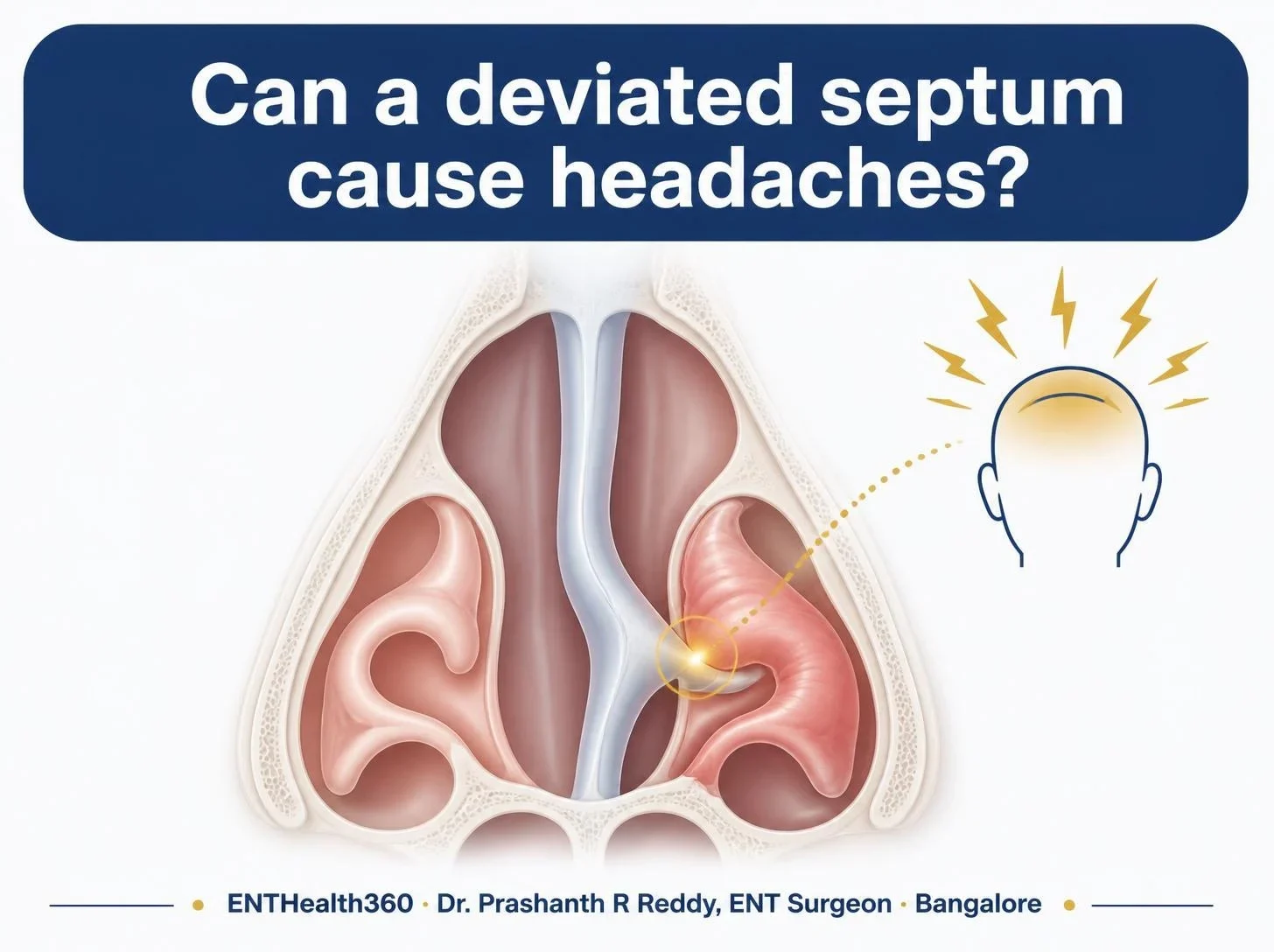
- One side always blocked, or the blockage switches but never fully clears: may suggest a deviated septum or enlarged turbinates.
- Snoring or mouth breathing at night, waking with a dry mouth or feeling unrefreshed.
- Blockage lasting more than 12 weeks, with facial pressure, reduced smell or thick discharge: may suggest chronic sinusitis or nasal polyps.
What is safe to try at home?
Simple, gentle measures help many people with short-term congestion.
| Usually safe | Avoid or limit |
|---|---|
| Saline spray or rinse | Vicks inside the nostrils |
| Vapour rub on chest/neck for adults and children over 2, as labelled | Any vapour rub on infants under 2 |
| Steam from a warm shower | Decongestant nasal drops beyond 5–7 days (rebound blockage) |
| Raising the head end of the bed | Burning leaves or camphor in a closed room |
| Reducing dust-mite exposure | Mixing several home remedies at once |
When should you see an ENT?
See an ENT if blockage lasts beyond a few weeks, affects sleep, or keeps coming back.
Seek urgent care for swelling around the eye, double vision, severe headache with fever or stiff neck, heavy or repeated nosebleeds, or a one-sided blockage with bloody discharge.
In my practice I commonly see people who have used Vicks or decongestant drops every night for years without ever having the inside of their nose examined. Often the cause is structural, such as a bent septum or swollen turbinates, which no rub can change.
How does an ENT diagnose the cause of a blocked nose?
The evaluation is quick and usually done in the clinic.
- History: which side, how long, triggers, snoring, sleep and sprays used.
- Nasal endoscopy: a thin camera, after a numbing spray, shows the septum, turbinates, polyps and sinus openings. It takes a few minutes.
- CT scan of the sinuses, only when needed, for chronic sinusitis or surgical planning.
- Allergy testing or further ENT evaluation if allergy or sleep apnoea is suspected.
What are the treatment options?
Treatment depends on the cause found.
- Allergic rhinitis: intranasal steroid sprays, antihistamines and trigger control, as recommended by the AAO-HNS guideline.
- Chronic sinusitis: saline irrigation and steroid sprays first; endoscopic sinus surgery when medical treatment has not helped.
- Deviated septum or enlarged turbinates: endoscopic septoplasty or turbinate reduction, done through the nostrils with no external cut. Results vary between individuals, so options are discussed after examination.
Blocked nose care in Bengaluru
Dr. Prashanth R. Reddy sees patients with nasal blockage, sinusitis and snoring at Sakra World Hospital, Marathahalli, and at the ENTHealth360 clinic in Koramangala. If your nose blocks most nights, you are welcome to book an evaluation through enthealth360.com or WhatsApp.
Frequently asked questions
Does Vicks under the nose actually unblock it? No. Menthol makes airflow feel easier by cooling nerve endings, but a controlled trial found no change in measured nasal resistance.
Is it dangerous to put Vicks inside the nostrils? It is not recommended. It can irritate the nasal lining, and long-term use of petroleum ointment in or around the nose has been linked to lipoid pneumonia.
Can I use Vicks on my baby? Not under 2 years. Research has shown it can increase airway mucus, and an infant developed breathing distress after it was applied under her nose.
Does a bay leaf help with blocked nose or sleep? There are no clinical trials showing a benefit. Burning leaves in a closed room may irritate the nose.
Why does my nose block every night? Lying down increases blood flow to the nasal lining, and allergies, a deviated septum or enlarged turbinates can make it worse. Nightly blockage is worth an ENT check.
What is safer than Vicks for a blocked nose? Saline spray or rinses, steam from a warm shower and head elevation are gentle options. Persistent blockage needs diagnosis rather than more home remedies.
Is it okay to use decongestant nasal drops every night? Most decongestant drops should not be used beyond 5–7 days, as longer use can cause rebound blockage.
References
- Eccles R, Jawad MS, Morris S. The effects of oral administration of (-)-menthol on nasal resistance to airflow and nasal sensation of airflow in subjects suffering from nasal congestion associated with the common cold. J Pharm Pharmacol. 1990;42(9):652-654. PubMed 1981905
- Paul IM, Beiler JS, King TS, Clapp ER, Vallati J, Berlin CM Jr. Vapor rub, petrolatum, and no treatment for children with nocturnal cough and cold symptoms. Pediatrics. 2010. doi:10.1542/peds.2010-1601. PubMed 21059712
- Abanses JC, Arima S, Rubin BK. Ferret study of Vicks VapoRub effects on airway mucus secretion and clearance. Chest. January 2009 (summary by Wake Forest University Baptist Medical Center). Wake Forest summary
- Nasal application of petrolatum ointment – a silent cause of exogenous lipoid pneumonia: successfully treated with prednisolone. Respiratory Medicine Case Reports. 2017. DOAJ record
- Seidman MD, et al. Clinical practice guideline: Allergic rhinitis. Otolaryngol Head Neck Surg. 2015. PubMed 25644617
- Mayo Clinic. Vicks VapoRub: An effective nasal decongestant? 2023. mayoclinic.org
About the author
Dr. Prashanth R Reddy is an ENT surgeon at ENTHealth360, Bangalore (MS ENT; MBA, IIM Bangalore; Seoul Rhinoplasty Fellowship), seeing patients at Sakra World Hospital, Marathahalli and in Koramangala. His practice focuses on how breathing affects sleep, energy and everyday performance.
Related reading: Why does my nose block when I lie down at night? · Is your nose the real reason behind your snoring?
For educational purposes only. Not a substitute for medical advice. Please consult a qualified ENT specialist.
General patient education. An individual consultation is needed to assess your symptoms and treatment options.