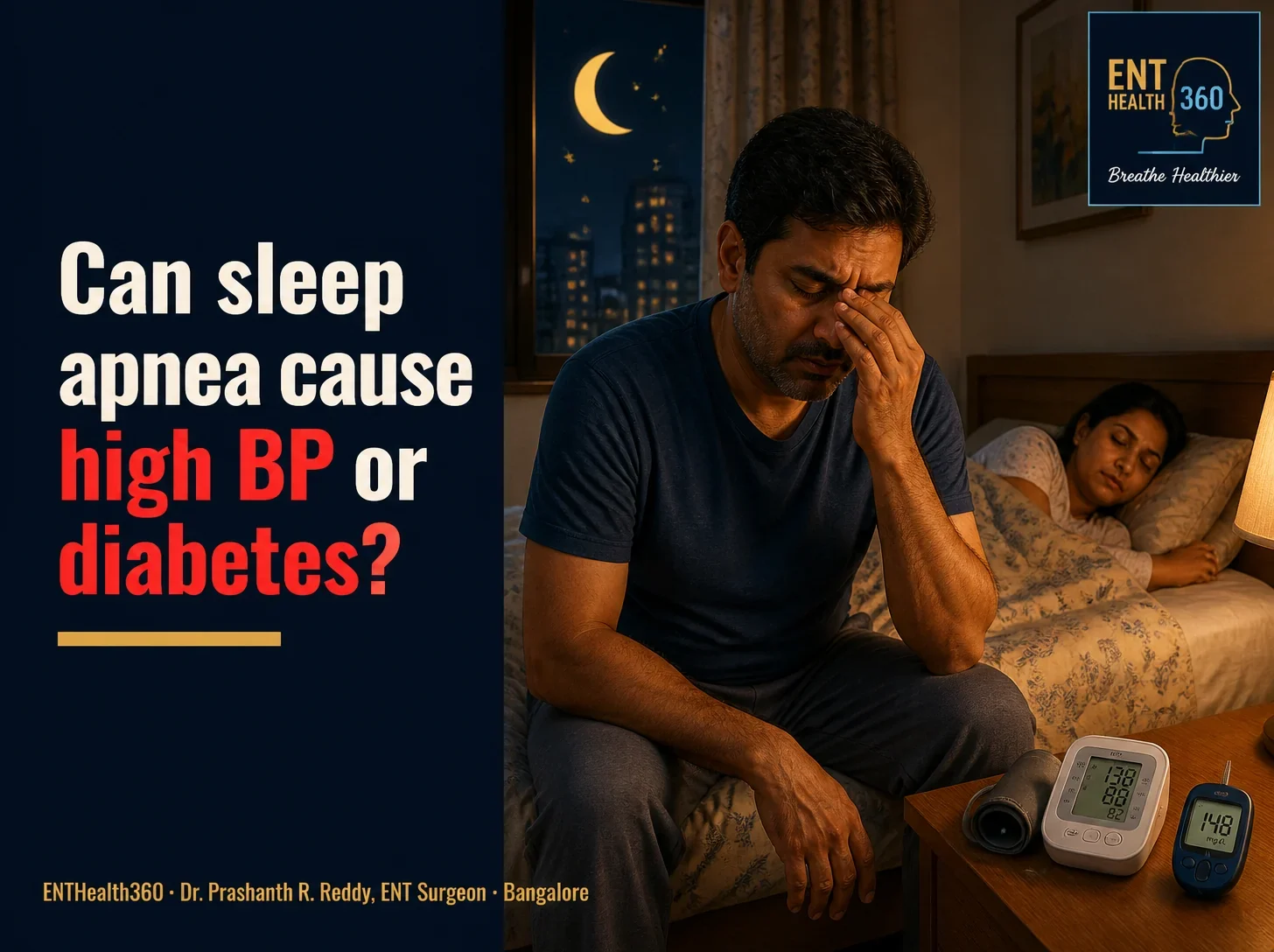
Short answer: Sleep apnea is closely associated with high blood pressure, difficult-to-control hypertension, insulin resistance and type 2 diabetes. Repeated oxygen drops and broken sleep disturb the hormones that regulate blood pressure and blood sugar. Treating sleep apnea may help improve overall health, so people with these conditions who snore or feel tired should discuss an ENT evaluation.
Medically reviewed by Dr. Prashanth R. Reddy, ENT Surgeon. Last reviewed: 08 November 2026.
Key takeaways
- Sleep apnea is a recognised risk factor for high blood pressure.
- Many people with resistant hypertension are found to have sleep apnea.
- Broken sleep and low oxygen can worsen insulin resistance and blood sugar control.
- Treating sleep apnea may support, but not replace, BP and diabetes treatment.
How can sleep apnea affect blood pressure and blood sugar?
Sleep apnea puts the body under repeated stress during sleep, which affects the systems that control blood pressure and blood sugar.
In obstructive sleep apnea, the throat repeatedly narrows or closes during sleep. Each episode lowers oxygen levels and triggers the "fight or flight" response. Adrenaline and cortisol rise, blood vessels tighten and heart rate jumps.
Normally, blood pressure dips at night. With sleep apnea, it may stay high, and over time daytime blood pressure can rise as well.
The same stress hormones raise blood sugar. Low oxygen and broken sleep can also make the body's cells respond less well to insulin, known as insulin resistance. Poor sleep affects appetite hormones too, which can increase cravings and weight gain.
Who is most likely to have this link?
The overlap is common, and certain features make sleep apnea more likely in people with BP or sugar problems.
- High BP needing three or more medicines (resistant hypertension)
- BP that stays high at night or in the early morning
- Type 2 diabetes or prediabetes with excess weight or a larger neck
- Loud snoring, gasping or pauses in breathing
- Daytime sleepiness, morning headaches or waking to pass urine at night
Sleep apnea is not the only cause of these conditions. Genetics, diet, activity and weight all play a part. But it is a treatable factor that is easy to miss.
What can you do at home?
Healthy daily habits support both sleep and metabolic health.
- Work towards a healthy weight with balanced meals and regular activity.
- Aim for at least 150 minutes of moderate exercise a week, if your doctor agrees.
- Avoid alcohol and heavy meals in the evening.
- Sleep on your side and keep the nose clear.
- Keep consistent sleep timings.
- Monitor BP and sugar as advised and take medicines regularly.
For many Bangalore professionals with long commutes and late work calls, protecting a regular sleep window can be one of the most useful changes.
How are breathing, sleep and energy connected here?
Breathing well during sleep supports steady hormones, which in turn support steady energy.
When breathing is interrupted, sleep becomes broken, stress hormones stay higher, and the body may handle sugar less efficiently. People often feel tired, hungry for quick energy and less motivated to exercise, which can worsen BP and sugar further.
When sleep apnea is treated, many people report deeper sleep and more stable energy. Some find their BP and appetite easier to manage. Results vary, and treatment works best alongside your regular medical care.
How does nose breathing support energy and BMR?
Your basal metabolic rate (BMR) is the energy your body burns at rest to keep the heart beating, the brain working and cells repairing. Your cells make that energy using oxygen, so how well you breathe matters.
Nose breathing helps in two ways:
- Warm, moist, filtered air. The nose warms, humidifies and filters each breath before it reaches the lungs. Conditioned air is gentler on the airway lining, which matters in Bangalore's air-conditioned offices and traffic dust. Mouth breathing skips this step and can leave the throat and airways dry.
- Nitric oxide from the sinuses. The paranasal sinuses continuously make nitric oxide (NO), a natural gas. When you breathe in through your nose, small amounts of this NO travel to the lungs, where studies suggest it may help widen tiny blood vessels and improve oxygen uptake. Mouth breathing largely bypasses it.
Nose breathing does not "boost" your BMR. That is set mainly by muscle mass, age, body size and hormones such as thyroid. But comfortable nasal breathing by day, and undisturbed breathing at night, support efficient oxygen supply and deeper sleep, which your body needs to use energy well and recover.
A simple check: sit quietly and breathe through your nose with your mouth closed for two minutes. If that feels difficult, or one side is always blocked, it is worth having your nose examined.
When should you see an ENT?
See an ENT if you have BP or diabetes along with sleep-related symptoms.
- Loud snoring most nights
- Pauses in breathing or gasping noticed by a partner
- Daytime sleepiness or poor concentration
- BP that remains high despite medicines
- Difficulty controlling sugars along with tiredness and snoring
Seek emergency care for chest pain, severe headache with very high BP, sudden weakness or numbness, slurred speech, confusion or very high or very low sugar readings with symptoms.
How does an ENT evaluate and treat it?
An ENT helps diagnose sleep apnea and works with your physician or diabetologist on a combined plan.
Evaluation includes a sleep history, examination of the nose, palate, tonsils and jaw, and a nasal endoscopy. An ENT evaluation checks where the airway narrows and guides treatment.
If sleep apnea is confirmed, treatment may include CPAP, a custom oral appliance, weight management, nasal treatment or surgery for selected people. Regular use of treatment is important for any potential benefit. The right option depends on the cause and severity. Continue your BP and diabetes medicines unless your doctor advises a change.
Frequently asked questions
Does nose breathing give me more energy? It does not add energy by itself, but it delivers warm, humidified air and sinus nitric oxide to the lungs, which may help oxygen uptake. Together with better sleep, that supports the energy your body uses at rest (BMR) and during activity.
Will treating sleep apnea cure my diabetes or BP? It is not a cure. However, it may help improve blood pressure and support better sugar control for some people, as part of overall treatment.
Should diabetics be checked for sleep apnea? If you have diabetes and snore, feel sleepy or are overweight, it is reasonable to ask your doctor about screening.
Can thin people with BP have sleep apnea? Yes. Jaw shape, nasal blockage and tonsil size can cause sleep apnea at any weight.
References
- Lundberg JO, Farkas-Szallasi T, Weitzberg E, et al. High nitric oxide production in human paranasal sinuses. Nature Medicine. 1995;1(4):370-373.
- Lundberg JO, Settergren G, Gelinder S, et al. Inhalation of nasally derived nitric oxide modulates pulmonary function in humans. Acta Physiologica Scandinavica. 1996;158(4):343-347.
- Keck T, Leiacker R, Heinrich A, Kühnemann S, Rettinger G. Humidity and temperature profile in the nasal cavity. Rhinology. 2000;38(4):167-171.
About the author
Dr. Prashanth R Reddy is an ENT surgeon at ENTHealth360, Bangalore (MS ENT; MBA, IIM Bangalore; Seoul Rhinoplasty Fellowship), seeing patients at Sakra World Hospital, Marathahalli and in Koramangala. His practice focuses on how breathing affects sleep, energy and everyday performance.
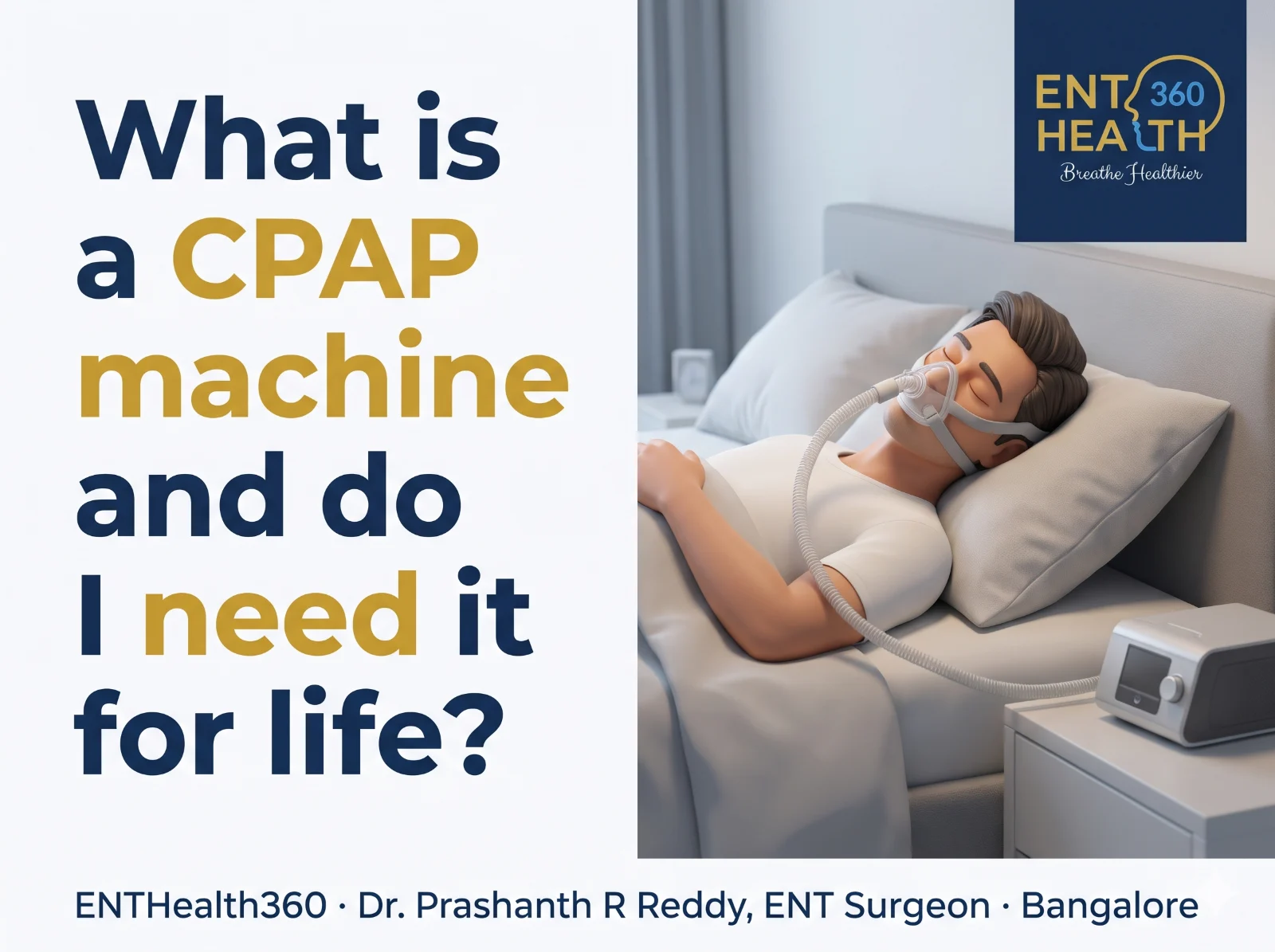
Related reading: What is a CPAP machine and do I need it for life? · Can a blocked nose cause snoring?
For educational purposes only. Not a substitute for medical advice. Please consult a qualified ENT specialist.
General patient education. An individual consultation is needed to assess your symptoms and treatment options.