
Written and medically reviewed by Dr. Prashanth R. Reddy, Senior Consultant ENT Surgeon (MS ENT) · Last updated: 19 November 2026
Short answer: Constant throat irritation, a lump-in-the-throat feeling, frequent throat clearing and a dry cough can be laryngopharyngeal reflux (LPRD), where stomach acid and enzymes reach the throat and voice box, often without heartburn. Antibiotics and cough syrups don't help it. An ENT can examine the voice box with a scope and guide diet, habit and medicine changes.
That Constant Throat Irritation That Just Won’t Go Away? It Could Be LPRD.
Why your “simple sore throat” may actually be something more serious—and long ignored.
Do you feel like there’s something stuck in your throat all the time? Are you always clearing your throat or battling a dry cough that won’t go away? Does your voice feel hoarse or tired—even though you haven’t been yelling or talking much?
If you said yes to any of these, you might be suffering from Laryngopharyngeal Reflux Disease, commonly known as LPRD — a silent troublemaker that many people (and even some doctors) often overlook.
Watch: Unexplained Cough? It Might Be LPRD! | Dr. Prashanth R Reddy

Watch: How to Treat Throat Irritation & Swallowing Problems | Dr. Prashanth Reddy

🧪 What Exactly is LPRD?
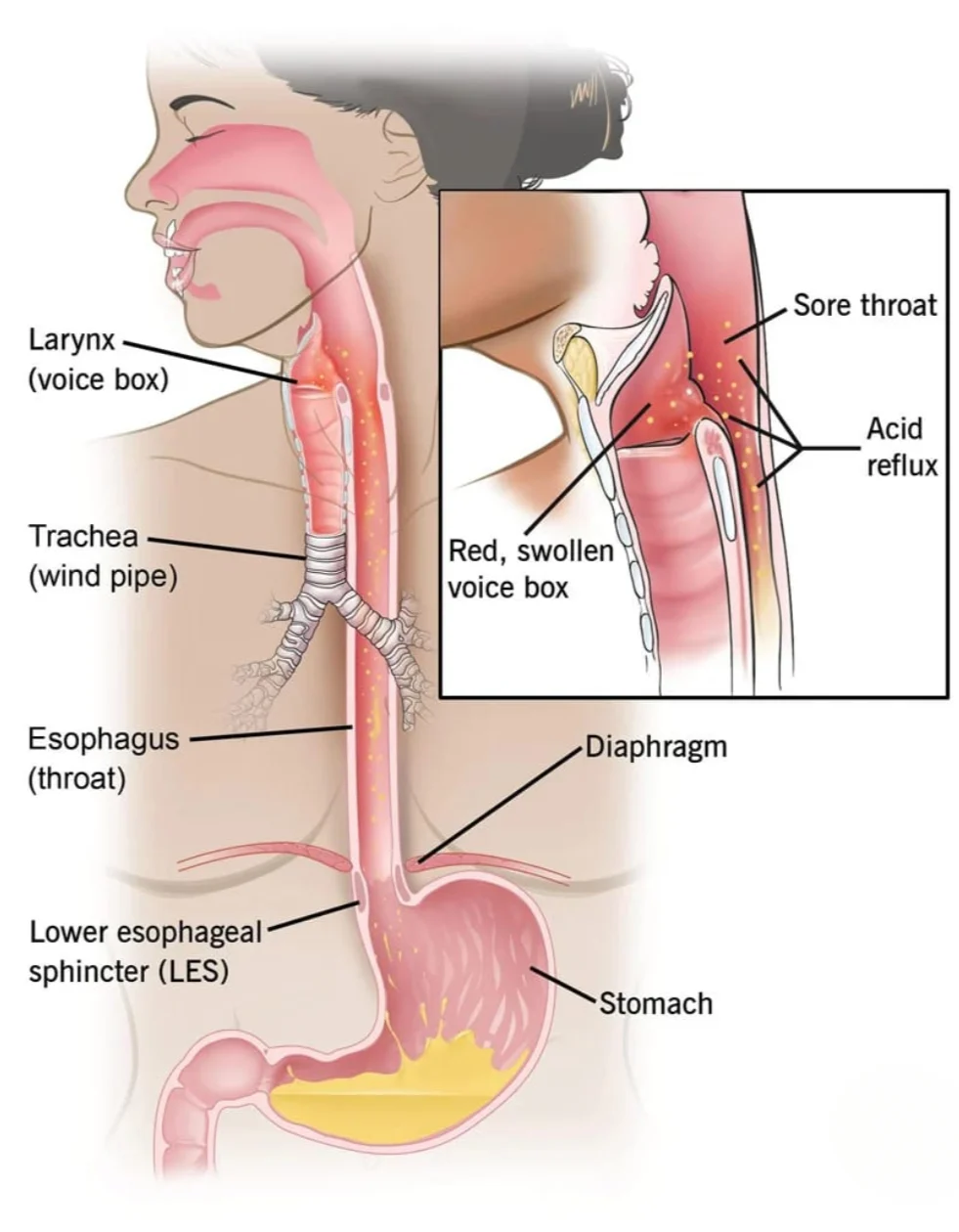
LPRD is a type of acid reflux, but unlike the typical one (GERD) that causes heartburn, LPRD quietly sends stomach acid up into your throat and voice box — without warning or that burning chest pain.
Because the throat and voice box are very sensitive, even small amounts of acid can cause:
- A constant itchy or burning throat
- The feeling of a lump in your throat
- Frequent throat clearing or dry cough
- Voice changes like hoarseness or strain
- That annoying feeling of postnasal drip, even when your nose is clear
🤒 Why It Doesn’t Go Away with Normal Treatments
Most people try antibiotics, throat lozenges, hot water with honey… and still feel no better. That’s because the real problem isn’t an infection — it’s the acid creeping into places it shouldn’t.
LPRD doesn’t always cause acidity or heartburn, so many patients don’t even realize it's acid reflux at all. But unless the reflux is treated, your throat will stay inflamed and irritated.
🚨 What Makes It Worse?
You might be unknowingly feeding the problem every day with:

- Late night dinners or lying down right after eating

- Spicy, oily, or fried foods

- Coffee, tea, alcohol, and soft drinks

- Mouth breathing due to a blocked nose or deviated septum
- Stress, anxiety, or poor sleep habits
Even snoring and nasal issues can aggravate LPRD by promoting mouth breathing, which dries the throat and worsens reflux symptoms.
🩺 How We Diagnose and Treat It
At my ENT practice, I see dozens of patients with “chronic sore throat” or “non-stop throat clearing” who’ve been treated incorrectly for months — even years.
We use a thorough Throat and nasal endoscopy to rule out infections, allergies, or growths — and confirm if it’s truly LPRD.
Our treatment approach includes:
✅ Acid reflux control with safe, targeted medications
✅ Diet & lifestyle changes that actually work
✅ Treating nasal blockage or improving nasal breathing
✅ Voice therapy, if hoarseness has set in
✅ For some, a nasal or sinus correction surgery may be needed for lasting relief
🌟 Why You Shouldn’t Ignore It
Ignoring LPRD doesn’t just keep you uncomfortable — it can lead to:
- Voice damage
- Chronic throat pain
- Breathing discomfort
- Sleep disturbances
- Increased risk of vocal cord swelling or lesions
✅ Don’t Let It Linger. Let’s Treat the Root Cause.
You don’t have to live with a nagging throat anymore.If you’re tired of being misdiagnosed or treated repeatedly without results, it’s time for a comprehensive ENT evaluation.
Related guides: Headaches that start in the nose: contact point headache guide · Symptom checklists: is it your nose?
Frequently asked questions
What is LPRD? Laryngopharyngeal reflux disease (LPRD) is a type of acid reflux in which stomach acid reaches the throat and voice box, often without heartburn. It can cause an itchy or burning throat, a lump-in-the-throat feeling, frequent throat clearing, dry cough, hoarseness and a sense of postnasal drip.
Why doesn't my throat irritation improve with antibiotics or lozenges? In LPRD the problem is not an infection but acid reaching the throat. Antibiotics, lozenges and hot water with honey do not treat this, so the throat stays inflamed until the reflux itself is controlled.
Can a blocked nose make LPRD worse? Yes. A blocked nose or deviated septum leads to mouth breathing, which dries the throat and can worsen reflux symptoms. Snoring and other nasal problems can aggravate LPRD in the same way.
How is LPRD diagnosed and treated? A throat and nasal endoscopy helps rule out infection, allergy or growths and confirm LPRD. Treatment includes targeted reflux medicines, diet and lifestyle changes, better nasal breathing, voice therapy if hoarseness has set in, and nasal or sinus surgery for some people.
🩺 Dr. Prashanth R. ReddyENT & Endoscopic Sinus SurgeonConsulting at leading hospitals across Bangalore 👨⚕️ Dr. Prashanth R. Reddy
ENT & Endoscopic Sinus Surgeon
📍 Sakra World Hospital, Marathahalli, Bangalore
📍 Dr Prashanth Reddy | ENT Specialist – Koramangala-
🕐 5:00 PM – 7:00 PM (Monday–Saturday)
🕐 11:00 AM – 1:00 PM (Sunday)
👉 Breathe better. Speak clearer. Sleep peacefully.
See Dr. Prashanth R. Reddy in Bengaluru
Video or phone consultations are available if you live outside Bengaluru.
Call +91 821 788 4802 or +91 99026 05737 · Book online: enthealth360.com/book-appointment
References
- Belafsky PC, Postma GN, Koufman JA. Validity and reliability of the reflux symptom index (RSI). J Voice. 2002. PubMed 12150380
- Kahrilas PJ, et al. Chronic cough due to gastroesophageal reflux in adults: CHEST guideline and expert panel report. Chest. 2016. PubMed 27614002
General patient education. An individual consultation is needed to assess your symptoms and treatment options.