Written and medically reviewed by Dr. Prashanth R. Reddy, Senior Consultant ENT Surgeon (MS ENT) · Last updated: 19 November 2026
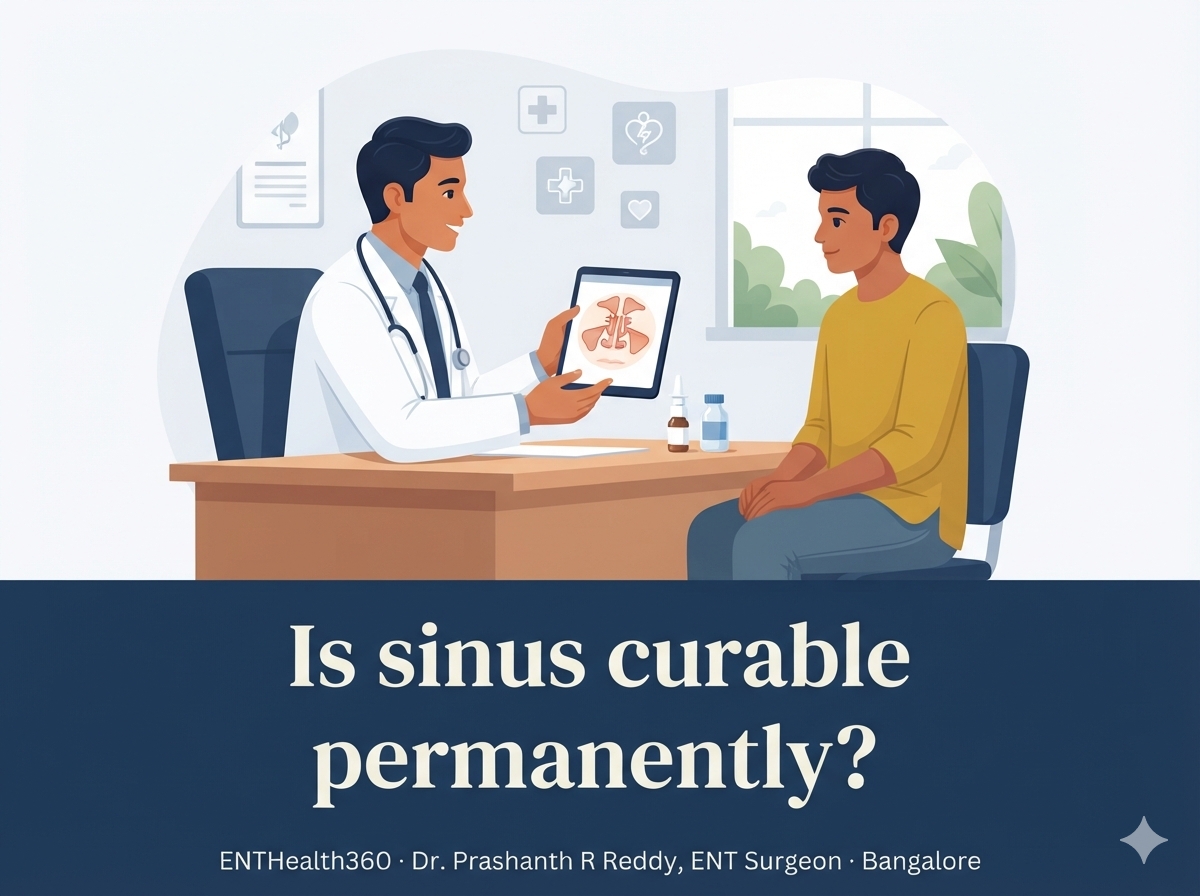
Short answer: Sinusitis can usually be controlled very well, and many people stay symptom-free for long periods. Acute sinusitis often settles completely. Chronic sinusitis is managed rather than 'cured overnight', using sprays, rinses, treating allergies or a blocked nose, and surgery only when medicines are not enough.
Top 3 things to know
- A one-off sinus infection usually clears completely. Most follow a cold and settle within a few weeks.
- Long-standing sinusitis is controlled, not switched off. With the right care, many people go long stretches without symptoms.
- Repeated sinusitis usually has a cause underneath. A bent septum, polyps, swollen turbinates or allergy. Treat that, and flare-ups usually ease.
Know someone who has had "sinus" for years? Send them this.
The full guide
Whether sinus problems settle for good depends on the cause. A one-off infection after a cold usually clears fully. Repeated or long-standing sinusitis is often driven by something underneath, such as a deviated septum, nasal polyps, swollen turbinates or allergy. When that underlying cause is found and treated, symptoms may reduce significantly. A nasal endoscopy in the clinic helps an ENT see what is blocking drainage. The aim is long-term control with the least treatment needed, so the honest answer is 'very manageable' rather than a promise of a permanent cure.
What is the difference between acute and chronic sinusitis?
Acute sinusitis lasts less than four weeks and usually follows a cold. Chronic sinusitis is sinus inflammation that lasts 12 weeks or longer.
Most acute sinusitis is viral and settles on its own with rest, fluids and saline. Chronic sinusitis behaves differently. The lining of the nose and sinuses stays swollen, so you get a blocked nose, thick discharge or postnasal drip, facial pressure and often a weaker sense of smell, week after week. A third pattern, recurrent acute sinusitis, means four or more separate attacks a year with clear gaps in between. Each pattern is treated differently, which is why the first step is working out which one you have.
Why does sinusitis keep coming back?
Sinusitis keeps coming back when something stops the sinuses from draining or keeps the lining inflamed. Treating each flare without finding that cause tends to give short relief.
- Deviated septum or swollen turbinates that narrow the drainage channels
- Nasal polyps, soft swellings that block the sinus openings and dull the sense of smell
- Allergy that keeps the lining swollen through the year
- A dental source, such as an infected upper back tooth, which can drain into the cheek sinus
- Smoke, dust and pollution that irritate the lining day after day
How does an ENT find the cause of chronic sinusitis?
An ENT finds the cause of chronic sinusitis with a nasal endoscopy in the clinic and, when symptoms persist or surgery is being considered, a CT scan of the paranasal sinuses (CT PNS).
The endoscope is a thin camera that shows polyps, pus, a bent septum or swollen turbinates directly. The CT scan maps the sinus openings and shows exactly which ones are blocked. Together they turn "sinus" from a vague label into a specific, treatable problem.
What treatments control chronic sinusitis?
Chronic sinusitis is controlled with saline rinses, steroid nasal sprays and treatment of allergy or a blocked nose, with surgery kept for people whose symptoms continue despite medicines.
- Saline rinses wash out mucus and irritants. A Cochrane review found some benefit in chronic sinusitis.
- Steroid nasal sprays calm the swollen lining when used regularly and correctly.
- Antibiotics help only when a bacterial infection is likely, and repeated courses don't fix the cause.
- Endoscopic sinus surgery (FESS) opens the blocked drainage pathways through the nostrils, often with correction of the septum or turbinates when they add to the blockage.
Surgery improves drainage. It doesn't change the tendency of the lining to get inflamed, so rinses and follow-up usually continue afterwards.
Can sinusitis come back after surgery?
Sinusitis can come back after surgery, especially in people with nasal polyps or strong allergy. Regular rinses, sprays and follow-up visits lower that chance and let any early return be treated simply.
When should you see an ENT for sinus problems?
See an ENT if sinus symptoms last more than 12 weeks, come back four or more times a year, or block only one side of the nose.
- Loss of smell that doesn't return after a cold
- One-sided blockage, bleeding or foul-smelling discharge
- Facial pressure or headaches that keep returning
Seek urgent care for swelling or redness around the eye, double vision, a severe headache with a stiff neck, or confusion.
Dr. Prashanth's perspective
Sinus inflammation is something that can recur. Taking antihistamines daily can, in fact, cause more harm in the long term, because they reduce ciliary movement and so slow down mucus clearance. Saline washing definitely helps, which is why I usually give it to my patients after surgery, once I have improved the sinus drainage.
— Dr. Prashanth R. Reddy, ENT Surgeon, ENTHealth360
Patient experiences
Losing the Sense of Smell: One Patient's Experience After Surgery

Related guides: Headaches that start in the nose: contact point headache guide · Symptom checklists: is it your nose?
Frequently asked questions
Can sinusitis go away completely? A one-off sinus infection after a cold usually clears fully. Long-standing or repeated sinusitis is usually managed for long-term control rather than cured overnight, and many people stay symptom-free for long periods with sprays, rinses and treatment of the underlying cause.
Why does my sinus problem keep coming back? Repeated sinusitis is often driven by something underneath, such as a deviated septum, nasal polyps, swollen turbinates or allergy. When that underlying cause is found and treated, symptoms may reduce significantly. A nasal endoscopy in the clinic helps your ENT see what is blocking drainage.
Is it okay to take antihistamines every day for sinus? Daily antihistamines can do more harm in the long term, because they reduce the movement of the tiny hair-like cilia that clear mucus, so drainage slows down. Saline washing helps. Please discuss any long-term medicine with your ENT doctor.
When is surgery needed for sinusitis? Surgery is considered only when medicines, sprays, rinses and treatment of allergy or a blocked nose are not enough. The aim is long-term control with the least treatment needed, decided after your ENT has examined the nose and sinuses.
Related reading: Why does my sinus keep coming back every few months? · Will sinus come back after surgery?
References
- Rosenfeld RM, et al. Clinical practice guideline (update): adult sinusitis. Otolaryngology-Head and Neck Surgery. 2015. PubMed 25832968
- Fokkens WJ, et al. European Position Paper on Rhinosinusitis and Nasal Polyps 2020 (EPOS 2020). Rhinology. 2020. PubMed 32077450
- Chong LY, et al. Saline irrigation for chronic rhinosinusitis. Cochrane Database of Systematic Reviews. 2016. doi:10.1002/14651858.CD011995.pub2
See Dr. Prashanth R. Reddy in Bengaluru
Video or phone consultations are available if you live outside Bengaluru.
Call +91 821 788 4802 or +91 99026 05737 · Book online: enthealth360.com/book-appointment
General patient education. An individual consultation is needed to assess your symptoms and treatment options.