The nose is the primary pathway for air entry into the lungs, while the sinuses are air-filled cavities lined with mucous membranes that help trap dust and microorganisms. When these passages become obstructed due to medical conditions, surgery may be required to restore proper airflow and function.
Watch: Nasal Surgery FAQs with Dr. Prashanth R. Reddy

Watch: Nasal Surgery FAQs in Kannada with Dr. Prashanth R. Reddy (ಮೂಗಿನ ಶಸ್ತ್ರಚಿಕಿತ್ಸೆಯ ಬಗ್ಗೆ ಪ್ರಶ್ನೆಗಳು)
Reasons for Nasal Surgery
- Deviated Nasal Septum – A condition where the nasal septum is misaligned, causing breathing difficulties.
- Nasal Obstruction – Blocked nasal passages can lead to reduced smell sensation, disturbed sleep, and breathing issues.
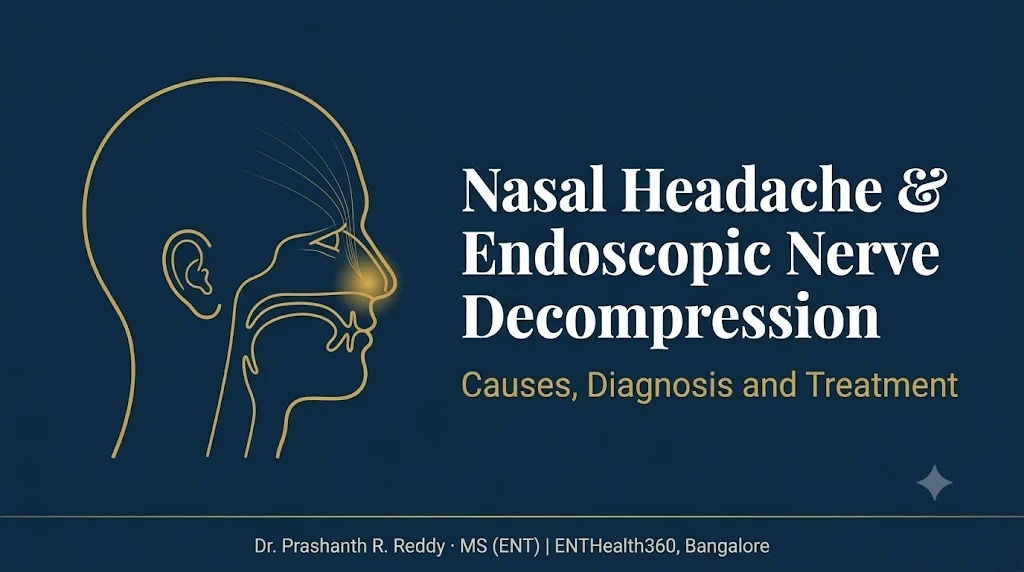
- Sluder's Neuralgia – A cause of severe headache and facial pain that is often missed and underdiagnosed, because the nose is not always examined when headaches are assessed.
- Nasal Tumors – Benign or malignant growths requiring surgical removal.
Reasons for Sinus Surgery
- Chronic Sinus Infections – Frequent infections that do not respond to medical treatment.
- Nasal Polyps – Benign growths that cause congestion and breathing difficulties.
- Fungal Infections – Conditions like Allergic Fungal Sinusitis (AFRS) or fungus ball formation.
- Structural Issues – Problems preventing proper sinus drainage.
- Foreign Body in Sinuses – Objects lodged in the sinus cavity causing discomfort and infections.
- Aspirin Sensitivity & Tooth Abscess – Contributing factors to sinus inflammation.
How is Sinus Surgery Performed?
Sinus surgery is typically done using Functional Endoscopic Sinus Surgery (FESS). Under general anesthesia, a 4mm endoscope is inserted into the nasal passages, allowing the surgeon to remove blockages and improve drainage. This technique ensures minimal invasion, faster recovery, and accurate diagnosis through tissue sampling.
Preparing for Surgery
- Inform your doctor about any medications and ask whether you should continue them.
- Stop smoking at least 3 weeks before surgery.
- Arrange for someone to accompany you during hospitalization (typically 1-3 days).
Risks of Endoscopic Sinus Surgery
While sinus surgery is safe, some risks include:
- Mild bleeding (common and usually subsides within a day)
- Infection (prevented with prescribed antibiotics)
- Cerebrospinal Fluid (CSF) Leak (extremely rare, but repaired immediately if detected)
- Vision Changes (temporary or permanent double vision is rare)
- Changes in Nasal Breathing or Smell (minimal risk with proper post-op care)
Post-Surgery Care & Recovery
First Few Days
- Sleep with your upper body elevated to reduce swelling.
- Use nasal douching (Nasowash kit) 3 times a day for 1 week.
- Take prescribed pain relievers (Calpol/Dolo) as directed.
- Drink plenty of fluids to stay hydrated.
- Apply an ice pack to the nose and cheeks if mild bleeding occurs.
- If bleeding continues, use Otrivin/Nasivion nasal spray (sparingly, 1-2 sprays per nostril every 6-8 hours for 1-2 days).
First Few Weeks
- Continue nasal douching to keep the sinuses clear.
- If a nasal splint was placed, it will be removed in 7 days.
- Some headache and tingling in upper teeth may occur but will subside.
- Your doctor may suggest nasal steroid spray after rinsing with saline.
- Avoid strenuous activities for at least 2 weeks.
Other Recovery Guidelines
Diet
- Drink 3-4 liters of fluids daily.
- Avoid spicy, oily, and sour foods to reduce acidity.
Physical Activity
- Start walking within 4-5 hours post-surgery.
- Avoid vigorous activities for at least 2 weeks.
Hygiene
- You can bathe normally the next day.
- Keep nasal passages moist with a humidifier (optional).
Warning Signs – When to Visit the Doctor
- Excessive bleeding that does not stop.
- Signs of infection (fever, yellow-green nasal discharge, severe headache).
- Blurred or double vision, swelling of eyes, stiff neck, or extreme fatigue.
- Clear, watery drainage from the nose (may indicate a CSF leak).
Patient experiences
Sakshi's Experience After Nasal Surgery

Ms. Sneha After Nasal Surgery

Frequently asked questions
When is nasal or sinus surgery needed? Surgery may be advised for a deviated septum or nasal obstruction affecting breathing, smell or sleep, chronic sinus infections that do not respond to medicines, nasal polyps, fungal sinusitis, or structural problems blocking sinus drainage. Sluder's neuralgia, a nasal cause of severe headache and facial pain, is another reason and is often missed.
How is endoscopic sinus surgery done? It is usually done as Functional Endoscopic Sinus Surgery (FESS) under general anaesthesia. A thin 4 mm endoscope is passed through the nostrils so the surgeon can remove blockages, improve drainage and take tissue samples if needed.
How long is the hospital stay and recovery? The hospital stay is typically one to three days. You can usually start walking within a few hours and bathe the next day. Nasal douching continues for some weeks, a splint, if placed, is removed in about seven days, and strenuous activity is avoided for at least two weeks.
What warning signs after sinus surgery need a doctor? Contact your doctor for bleeding that does not stop, fever or yellow-green discharge with severe headache, blurred or double vision, eye swelling, a stiff neck, extreme tiredness, or clear watery drainage from the nose.
Expert ENT Care in Bangalore
If you're experiencing chronic sinus infections, nasal blockage, or breathing difficulties, consult Dr. Prashanth R Reddy, a leading ENT specialist in Bangalore. Our clinic offers advanced endoscopic sinus surgery and personalized treatment plans for optimal recovery.
General patient education. An individual consultation is needed to assess your symptoms and treatment options.