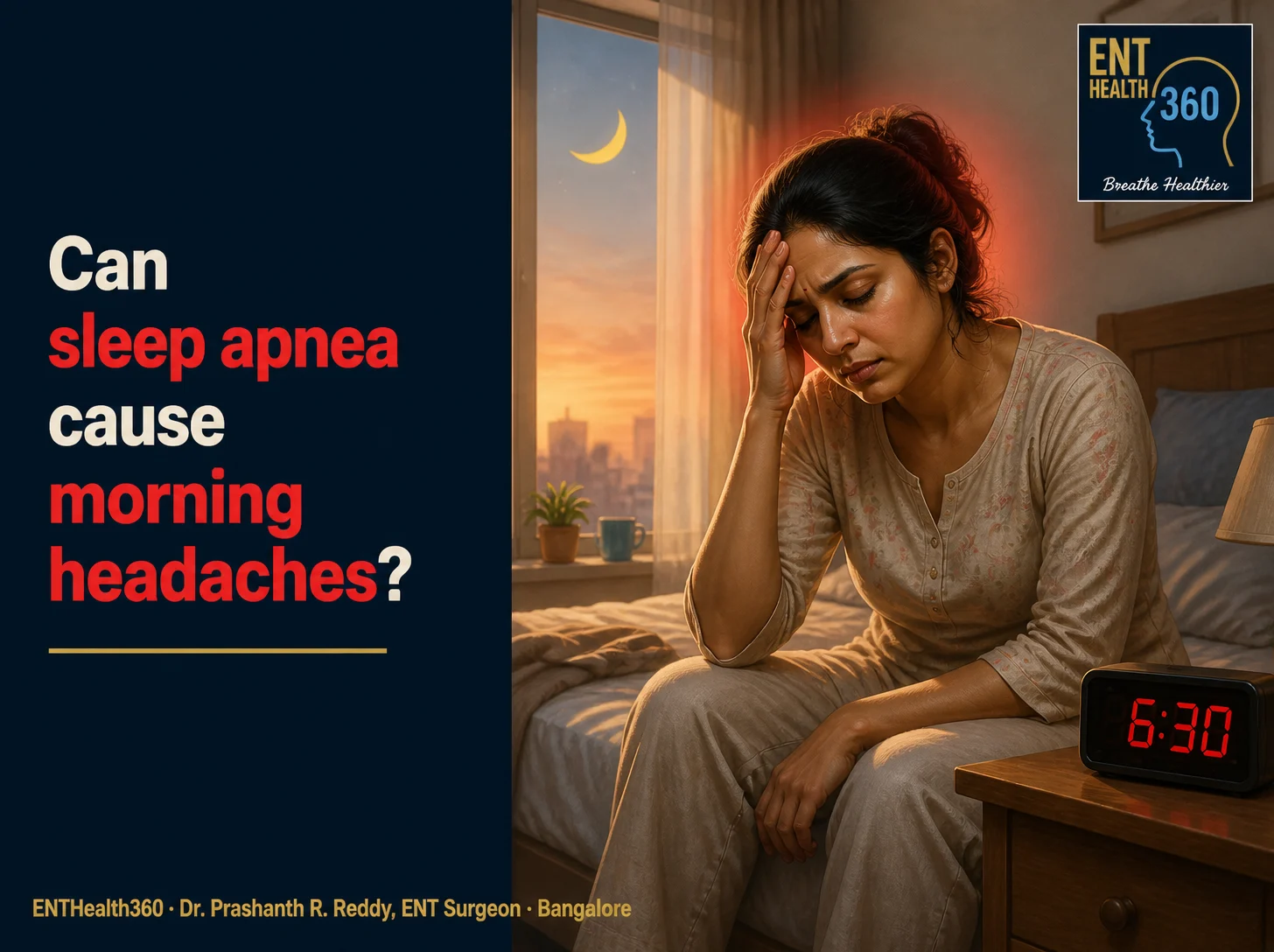
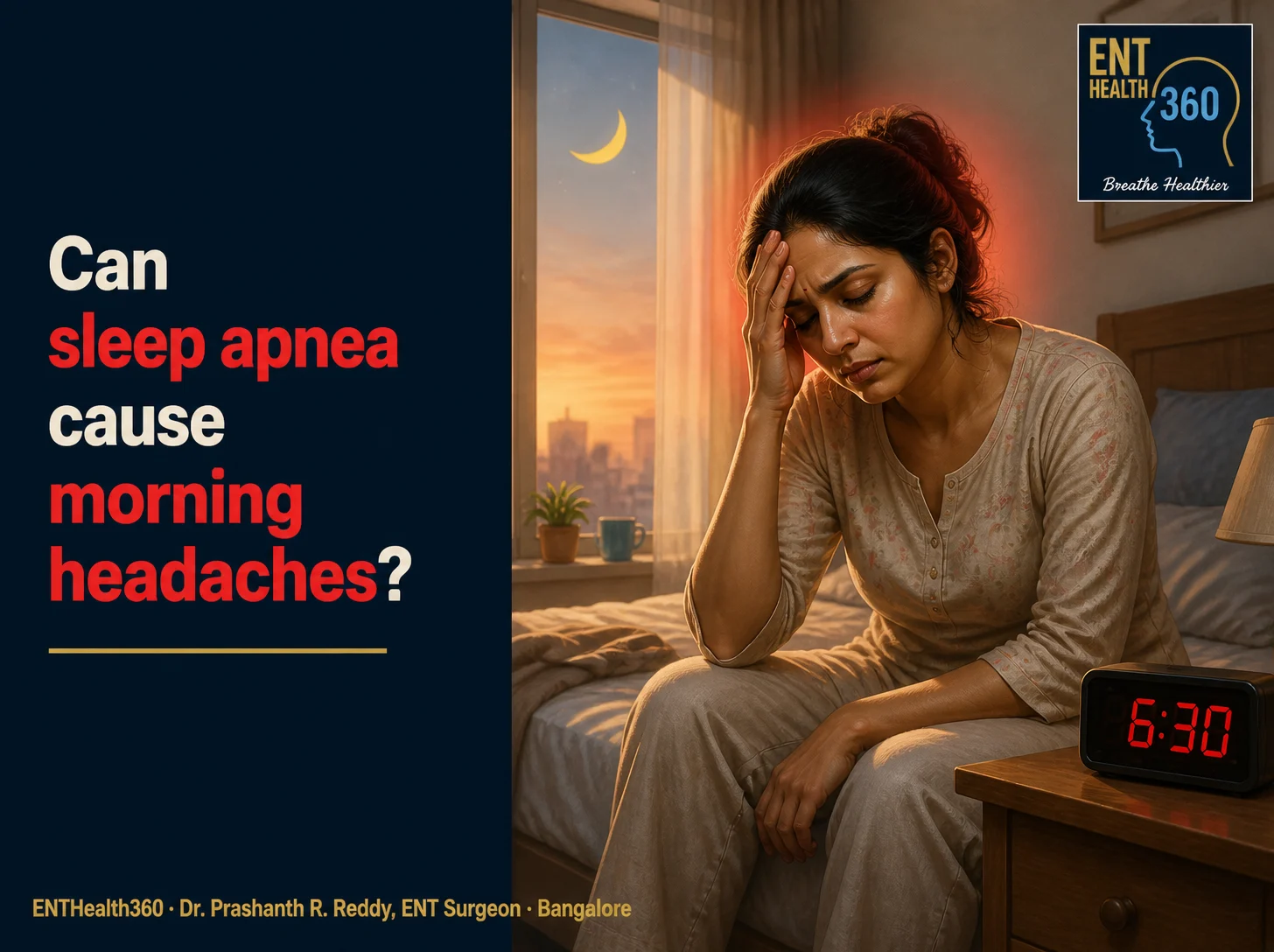
Short answer: Yes. Sleep apnea can cause morning headaches. When your airway repeatedly narrows or closes during sleep, oxygen levels fall and carbon dioxide rises. This can trigger a dull, pressing headache on waking that usually eases within a few hours. Regular morning headaches with snoring or daytime sleepiness are a reason to consider ENT evaluation.
Dr. Prashanth's perspective: A sleep apnea headache comes from low oxygen during the night. More than the pain itself, people notice brain fog, tiredness and a heavy head in the morning. A contact point headache is different: it sits in a specific spot, like behind the eye, the forehead or the temple.
Key takeaways
Sleep apnea headaches are typically present on waking and fade within a few hours.
They are often felt on both sides of the head as a pressing ache.
Snoring, dry mouth and daytime sleepiness alongside headaches point towards sleep apnea.
Other causes, such as teeth grinding or painkiller overuse, should also be considered.
Why does sleep apnea cause morning headaches?
Sleep apnea causes morning headaches mainly because of changes in oxygen and carbon dioxide levels during the night.
In obstructive sleep apnea, the throat partly or fully closes many times during sleep. Each event lowers oxygen and lets carbon dioxide build up in the blood. Raised carbon dioxide widens blood vessels in the brain, which can increase pressure inside the head and lead to a headache.
Broken sleep also plays a part. Repeated awakenings disrupt the deeper stages of sleep, and poor-quality sleep itself is a known headache trigger. Once you are awake and breathing normally, levels return to normal, which is why the headache tends to fade within a few hours.
How can you tell if your headache is linked to sleep apnea?
A sleep apnea headache usually has a recognisable pattern.
Present on waking, most mornings
Felt on both sides or across the forehead, often pressing rather than throbbing
Usually eases within about four hours
No nausea or sensitivity to light, unlike typical migraine
It often comes with other signs of sleep apnea:
Loud snoring, gasping or breathing pauses noticed by others
Dry mouth or sore throat on waking
Feeling unrefreshed and sleepy during the day
Waking at night to pass urine
Other common causes of morning headaches include teeth grinding (bruxism), too little sleep, caffeine withdrawal, alcohol the night before, eye strain, sinus problems, and medication overuse headache from frequent painkillers.
What can you do at home?
You can take some practical steps to understand and ease morning headaches.
Keep a headache diary for two weeks: time of onset, how long it lasts, sleep hours and caffeine intake.
Ask a partner whether you snore or stop breathing, or record your sleep on your phone.
Avoid alcohol and heavy meals close to bedtime.
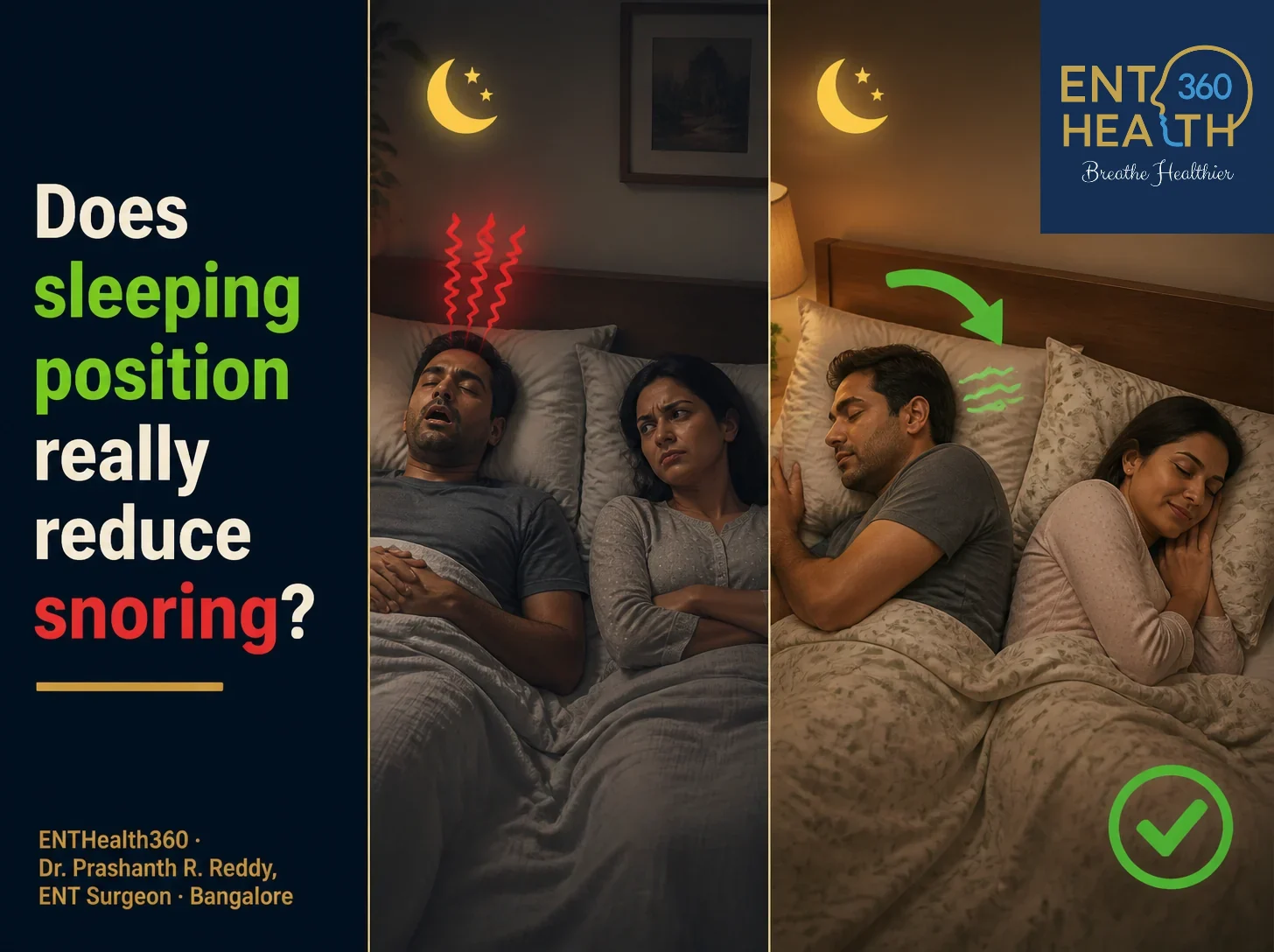
Sleep on your side if you snore on your back.
Avoid taking painkillers more than a few days a week, as this can cause rebound headaches.
Keep your nose clear with saline rinses if it is often blocked.
If your partner notices you stop breathing during sleep, ask your doctor about an ENT evaluation.
How are breathing, sleep and energy connected here?
A morning headache is often a visible sign that breathing during the night was not smooth.
Repeated breathing pauses fragment sleep, so you start the day both in pain and under-rested. That combination can slow your thinking, shorten your temper and make the first hours of work or study harder. When night-time breathing is treated, many people find their mornings feel clearer and their energy steadier through the day.
How does nose breathing support energy and BMR?
Your basal metabolic rate (BMR) is the energy your body burns at rest to keep the heart beating, the brain working and cells repairing. Your cells make that energy using oxygen, so how well you breathe matters.
Nose breathing helps in two ways:
Warm, moist, filtered air. The nose warms, humidifies and filters each breath before it reaches the lungs. Conditioned air is gentler on the airway lining, which matters in Bangalore's air-conditioned offices and traffic dust. Mouth breathing skips this step and can leave the throat and airways dry.
Nitric oxide from the sinuses. The paranasal sinuses continuously make nitric oxide (NO), a natural gas. When you breathe in through your nose, small amounts of this NO travel to the lungs, where studies suggest it may help widen tiny blood vessels and improve oxygen uptake. Mouth breathing largely bypasses it.
Nose breathing does not "boost" your BMR. That is set mainly by muscle mass, age, body size and hormones such as thyroid. But comfortable nasal breathing by day, and undisturbed breathing at night, support efficient oxygen supply and deeper sleep, which your body needs to use energy well and recover.
A simple check: sit quietly and breathe through your nose with your mouth closed for two minutes. If that feels difficult, or one side is always blocked, it is worth having your nose examined.
When should you see an ENT?
You should see an ENT or doctor if morning headaches happen regularly, especially with snoring.
Seek urgent medical care for a sudden, severe "worst-ever" headache, or headache with weakness, confusion, fever with neck stiffness, or loss of vision.
Seek prompt care for a new headache that worsens steadily over days or wakes you from sleep with vomiting.
Get evaluated promptly if you feel drowsy while driving.
Morning headaches with snoring, gasping or daytime sleepiness.
Headaches that persist for more than a few weeks.
How an ENT evaluates and treats it
An ENT looks at whether a breathing problem during sleep is behind your headaches and checks the airway for blockages.
Evaluation includes a sleep and headache history, examination of the nose and throat, and often a nasal endoscopy to look for a deviated septum, swollen turbinates or sinus problems. Where needed, further testing can confirm whether sleep apnea is present and how severe it is. If the pattern does not fit sleep apnea, a physician or neurologist may be involved.
If sleep apnea is confirmed, treatment may include CPAP, an oral appliance, positional therapy, weight management, treatment of nasal blockage or surgery in selected people. The right option depends on the cause. Many people notice morning headaches ease once breathing at night is treated.
Frequently asked questions
Does nose breathing give me more energy? It does not add energy by itself, but it delivers warm, humidified air and sinus nitric oxide to the lungs, which may help oxygen uptake. Together with better sleep, that supports the energy your body uses at rest (BMR) and during activity.
Can snoring alone cause headaches? Simple snoring without apnea is less likely to cause headaches, but it can disturb sleep. Regular headaches with snoring are a reason to check for apnea.
How quickly do headaches improve with CPAP? Many people notice improvement within a few weeks of regular use, though this varies.
Could my morning headache be from my sinuses? Possibly. Sinus problems can cause facial pressure in the morning, so an ENT examination helps tell the difference.
References
Lundberg JO, Farkas-Szallasi T, Weitzberg E, et al. High nitric oxide production in human paranasal sinuses. Nature Medicine. 1995;1(4):370-373.
Lundberg JO, Settergren G, Gelinder S, et al. Inhalation of nasally derived nitric oxide modulates pulmonary function in humans. Acta Physiologica Scandinavica. 1996;158(4):343-347.
Keck T, Leiacker R, Heinrich A, Kühnemann S, Rettinger G. Humidity and temperature profile in the nasal cavity. Rhinology. 2000;38(4):167-171.
About the author
Dr. Prashanth R Reddy is an ENT surgeon at ENTHealth360, Bangalore (MS ENT; MBA, IIM Bangalore; Seoul Rhinoplasty Fellowship), seeing patients at Sakra World Hospital, Marathahalli and in Koramangala. His practice focuses on how breathing affects sleep, energy and everyday performance.
Medically reviewed by Dr. Prashanth R. Reddy, ENT Surgeon. Last reviewed: 15 November 2026. For educational purposes only. Not a substitute for medical advice. Please consult a qualified ENT specialist.
General patient education. An individual consultation is needed to assess your symptoms and treatment options.