
Short answer: Snoring often reduces with sleeping on your side, avoiding alcohol and sedatives at night, treating a blocked nose, losing excess weight and keeping a regular sleep schedule. If snoring is loud and nightly, or comes with breathing pauses, gasping or daytime sleepiness, get checked for obstructive sleep apnea before relying on home fixes.
Medically reviewed by Dr. Prashanth R. Reddy, ENT Surgeon. Last reviewed: 11 November 2026.
Key takeaways
- Snoring is the vibration of relaxed throat tissues as air passes through a narrowed airway.
- Simple lifestyle steps help many people, but the right fix depends on where the narrowing is.
- Loud nightly snoring with pauses or gasping needs evaluation for sleep apnea.
- An ENT can examine the nose, palate, tonsils and tongue base to find the source.
Dr. Prashanth's perspective
Before any snoring advice, I look at the nose and throat to understand where the blockage is. The right treatment depends on that level. Mouth taping, a trend going viral online, is not recommended without an ENT assessment, as it can be unsafe, especially if your nose is blocked or you may have sleep apnea.
— Dr. Prashanth R. Reddy, ENT Surgeon, ENTHealth360
Top 3 things to try tonight
- Sleep on your side. A body pillow behind your back stops you rolling over.
- Skip alcohol and sedatives for 3 to 4 hours before bed. They relax throat muscles further.
- Clear your nose. A saline rinse can help if you are blocked up.
Not sure whether it is simple snoring? Tick through the symptom checklists first.
Why do people snore in the first place?
Snoring happens when air has to squeeze through a narrowed airway during sleep, making soft tissues flutter.
As you fall asleep, throat muscles relax. The soft palate, the uvula (the small hanging tissue at the back of the mouth), the tonsils or the tongue base may sag into the airway and vibrate as air rushes past.
The narrowing can start anywhere from the nose to the voice box, which is why fixes differ between people.
How do you know what kind of snoring you have?
A few clues can tell you whether your snoring is simple or a sign of something more.
- Positional snoring: mostly on your back, quieter on your side.
- Nasal snoring: worse with a cold, allergy or blocked nose; you often breathe through your mouth.
- Alcohol-related snoring: louder on nights you drink.
- Snoring with sleep apnea: loud, nightly snoring with pauses in breathing, gasping or choking, and waking unrefreshed.
Ask your partner, or record a few nights on your phone. Silences followed by a snort or gasp deserve a medical review.
What can you do at home to stop snoring?
Several safe, practical steps can reduce snoring for many people.
- Sleep on your side. A body pillow behind your back can stop you rolling over.
- Avoid alcohol and sedatives for three to four hours before bed. They relax throat muscles further.
- Clear your nose. Saline rinses can help, especially during Bangalore's pollen seasons and the monsoon months. If you have allergies, discuss a suitable nasal spray with your doctor.
- Manage weight. Extra weight around the neck can narrow the airway. Even modest weight loss may help.
- Keep regular sleep timings. Overtiredness leads to deeper muscle relaxation and louder snoring.
How are breathing, sleep and energy connected here?
Snoring is a breathing problem that happens while you sleep, and it can affect how rested you feel.
A narrowed airway makes breathing harder work at night. In some people, this causes brief arousals they never remember, so sleep becomes lighter and less restorative.
When the cause is treated, many people report deeper sleep, fresher mornings and steadier energy through the day. That can show up at work, in workouts, in studies and in patience with family.
How does nose breathing support energy and BMR?
Your basal metabolic rate (BMR) is the energy your body burns at rest to keep the heart beating, the brain working and cells repairing. Your cells make that energy using oxygen, so how well you breathe matters.
Nose breathing helps in two ways:
- Warm, moist, filtered air. The nose warms, humidifies and filters each breath before it reaches the lungs. Mouth breathing skips this step and can leave the throat and airways dry.
- Nitric oxide from the sinuses. The paranasal sinuses continuously make nitric oxide (NO), a natural gas. When you breathe in through your nose, small amounts of this NO travel to the lungs, where studies suggest it may help widen tiny blood vessels and improve oxygen uptake. Mouth breathing largely bypasses it.
Nose breathing does not "boost" your BMR. That is set mainly by muscle mass, age, body size and hormones such as thyroid. But comfortable nasal breathing by day, and undisturbed breathing at night, support efficient oxygen supply and deeper sleep, which your body needs to use energy well and recover.
A simple check: sit quietly and breathe through your nose with your mouth closed for two minutes. If that feels difficult, or one side is always blocked, it is worth having your nose examined.
When should you see an ENT?
See an ENT if home measures have not helped after a few weeks, or sooner if you have warning signs.
- Your partner notices you stop breathing during sleep
- You wake up gasping or choking
- You feel sleepy during the day, or nod off while driving or in meetings
- Morning headaches or dry mouth
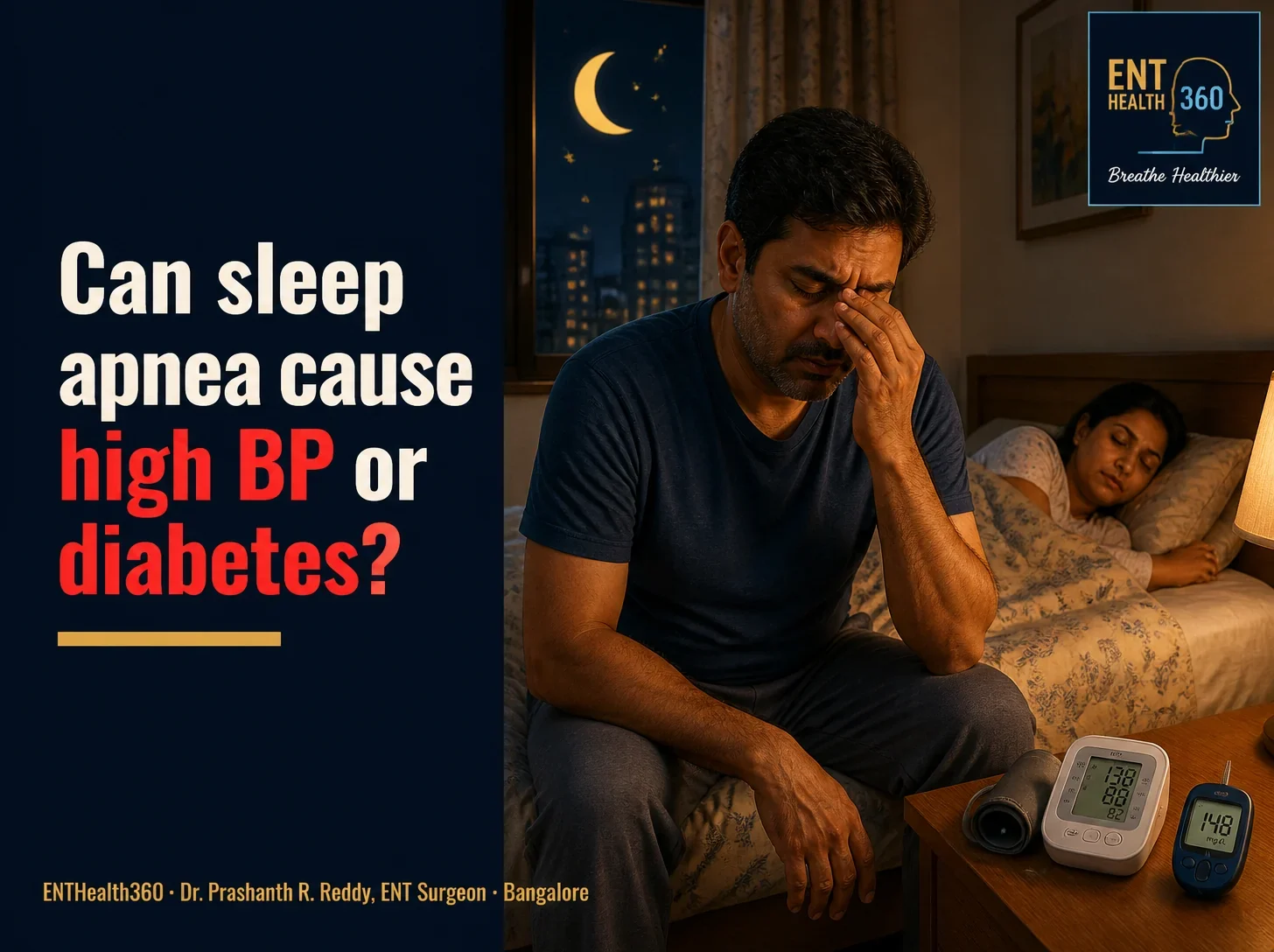
- High blood pressure, diabetes or heart disease along with snoring
- A child who snores loudly most nights, breathes through the mouth or has pauses
Seek urgent medical care if you, or someone you are driving with, falls asleep at the wheel, or if you have chest pain or severe breathlessness at night.
How does an ENT evaluate and treat snoring?
An ENT aims to find exactly where your airway narrows, because the right option depends on the cause.
Evaluation includes a history from you and ideally your partner, and an examination of the nose, mouth and throat. A nasal endoscopy, using a thin camera, shows the septum, turbinates and back of the nose. If sleep apnea is suspected, an ENT evaluation may be advised.
Treatment may include:
- Medical treatment for allergy or nasal swelling
- Positional therapy and weight guidance
- A custom oral appliance made by a dentist, which moves the lower jaw slightly forward
- CPAP, if moderate or severe sleep apnea is found
- Surgery on the nose, palate or tonsils for selected people with a clear anatomical cause
Results vary from person to person.
Frequently asked questions
Does nose breathing give me more energy? It does not add energy by itself, but it delivers warm, humidified air and sinus nitric oxide to the lungs, which may help oxygen uptake. Together with better sleep, that supports the energy your body uses at rest and during activity.
Can snoring go away on its own? It can improve if the trigger goes away, such as a cold settling or stopping evening alcohol. Snoring due to anatomy or weight usually persists without treatment.
Do anti-snoring sprays and pillows work? Some people find them helpful, but only when they match the cause. A pillow will not fix a blocked nose.
Is snoring in children normal? Occasional snoring with a cold can be normal. Regular loud snoring in a child should be checked, as enlarged tonsils or adenoids can affect sleep, behaviour and growth.
References
- Lundberg JO, Farkas-Szallasi T, Weitzberg E, et al. High nitric oxide production in human paranasal sinuses. Nature Medicine. 1995;1(4):370-373.
- Lundberg JO, Settergren G, Gelinder S, et al. Inhalation of nasally derived nitric oxide modulates pulmonary function in humans. Acta Physiologica Scandinavica. 1996;158(4):343-347.
- Keck T, Leiacker R, Heinrich A, Kühnemann S, Rettinger G. Humidity and temperature profile in the nasal cavity. Rhinology. 2000;38(4):167-171.
About the author
Dr. Prashanth R Reddy is an ENT surgeon at ENTHealth360, Bangalore (MS ENT; MBA, IIM Bangalore; Seoul Rhinoplasty Fellowship), seeing patients at Sakra World Hospital, Marathahalli and in Koramangala. His practice focuses on how breathing affects sleep, energy and everyday performance.
Related reading: Can a blocked nose cause snoring? · Can sleep apnea cause high BP or diabetes?
For educational purposes only. Not a substitute for medical advice. Please consult a qualified ENT specialist.
General patient education. An individual consultation is needed to assess your symptoms and treatment options.