Short answer: CPAP is a machine worn every night that holds the airway open with air pressure; it works well while it is used but does not change the cause. Snoring surgery corrects the narrow part of the airway, such as a bent septum, swollen turbinates, large tonsils or the palate, and is a one-time treatment with a recovery period. Which suits you depends on what an ENT examination and CT scan find, and on whether you can use CPAP comfortably.
Medically reviewed by Dr. Prashanth R. Reddy, ENT Surgeon (MS ENT) · Last reviewed: 28 October 2026
Key takeaways
- CPAP treats the symptom night by night; surgery aims to correct the anatomical cause of the narrowing.
- CPAP is highly effective for sleep apnea when worn regularly, but many people find it hard to use every night over the long term.
- Surgery suits people with a clear, fixable narrowing found on ENT examination and CT, and people who cannot tolerate CPAP.
- They are not always either-or: fixing a blocked nose can make CPAP more comfortable and easier to use.
CPAP vs snoring surgery: side by side
| Feature | CPAP machine | Snoring surgery |
|---|---|---|
| How it works | Gentle air pressure through a mask keeps the airway open during sleep | Corrects the narrow site: nose (septum, turbinates, polyps), palate, tonsils or tongue base |
| Does it treat the cause? | No. It holds the airway open only while it is worn | Yes, it aims to correct the anatomical narrowing found on evaluation |
| Commitment | Every night, usually long term | One-time procedure, plus follow-up |
| When it starts working | From the first night of correct use | After healing, usually over a few weeks |
| Recovery | None, but getting used to the mask can take weeks | Nasal surgery: usually 1 to 2 weeks; palate or tonsil surgery: usually 1 to 3 weeks of sore throat |
| Common problems | Mask discomfort, air leaks, dry or blocked nose, noise, air swallowing, travel and power needs | Pain during recovery, small risks of bleeding or infection, anaesthesia, temporary swallowing changes after palate surgery |
| Works best for | Moderate to severe sleep apnea, especially with obesity or a narrowing at many levels | A clear, fixable narrowing; simple snoring; people who cannot tolerate CPAP |
| Ongoing costs | Machine servicing and regular mask, tubing and filter replacement | Mainly one-time |
| Key evaluation before starting | Sleep study to confirm sleep apnea and set the pressure | ENT examination, nasal endoscopy and CT scan; sometimes sleep endoscopy |
| Can the two work together? | Yes. Nasal surgery can lower the pressure CPAP needs and make it easier to use, and surgery can be considered later if CPAP is not working out | |
Why does the cause matter so much?
Snoring and sleep apnea happen because the airway is narrow somewhere between the nose and the voice box. CPAP pushes air past that narrow point, whatever it is. Surgery can only help if the narrow point is known. That is why a detailed ENT examination, with nasal endoscopy and a CT scan, comes before any decision. It shows whether there is a bent septum, swollen turbinates, polyps, enlarged tonsils or adenoids, or a long soft palate, and whether the problem is at one level or several.
A sleep study measures how often breathing drops and how low oxygen falls. It helps judge severity and set CPAP pressure, but it does not show where or why the airway is blocked.
Who usually does better with CPAP?
- People with moderate to severe sleep apnea and significant obesity.
- People whose narrowing is spread over many levels of the airway.
- People who are not fit for surgery or prefer to avoid it.
- People who find the mask comfortable and can use it most nights.
Who may be a candidate for surgery?
- People with a clear, fixable narrowing, such as a bent septum, swollen turbinates or large tonsils.
- People with sleep apnea who cannot tolerate CPAP or do not want to use it. International sleep-medicine guidance recommends discussing a surgical opinion for these adults.
- People with simple snoring, for whom CPAP is not usually prescribed.
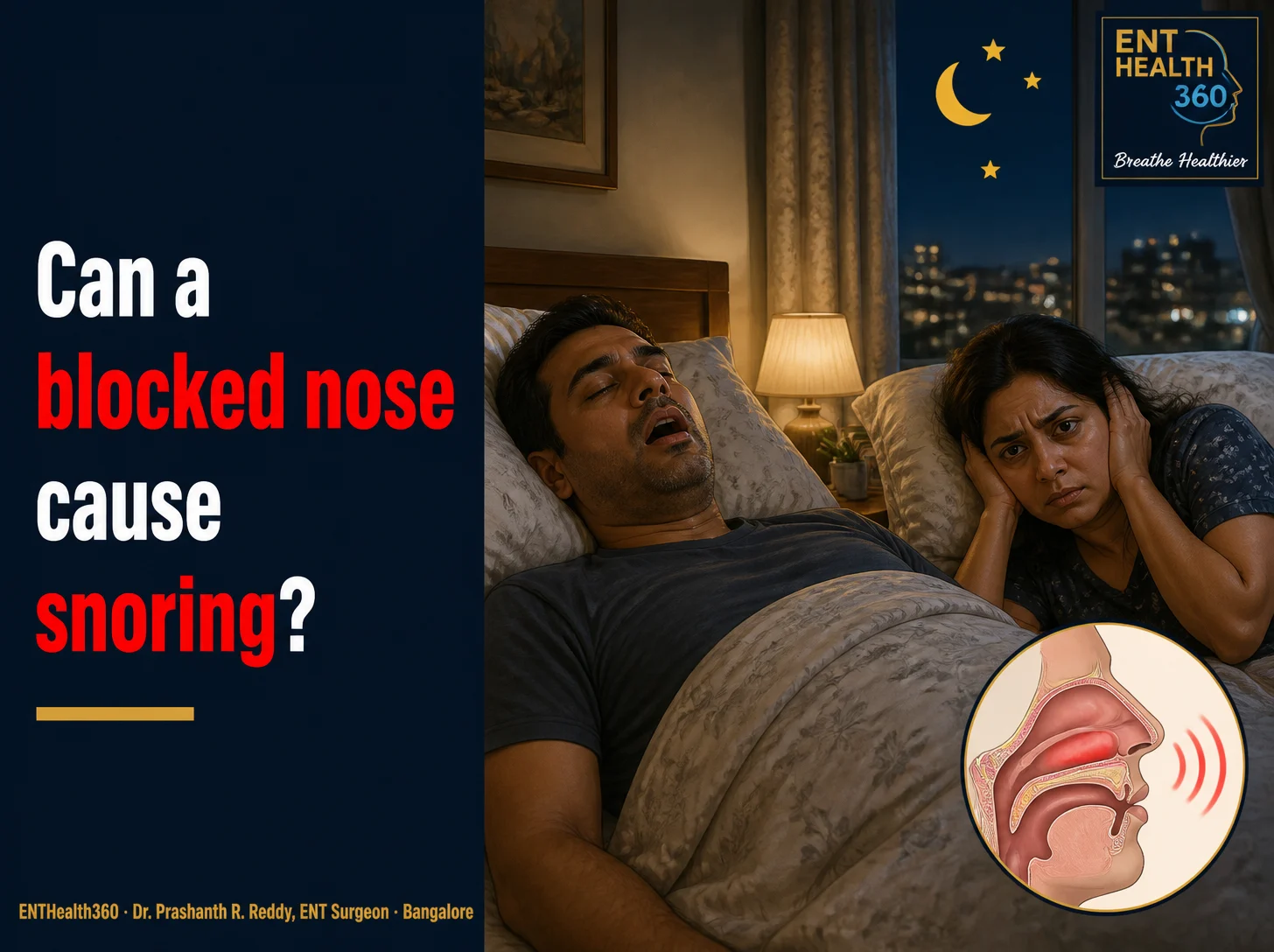
- People who find CPAP difficult because of a blocked nose; nasal surgery can make CPAP easier.
What surgery does and does not do
Surgery is chosen for the site the evaluation finds. Nasal surgery, done through the nostrils, opens the nose and improves breathing through it; on its own it usually does not cure sleep apnea but often reduces snoring and makes CPAP easier. Palate, tonsil or tongue-base procedures address narrowing further down. Results depend on careful selection, and weight and age can change the airway over time, so follow-up matters.
Questions to ask before deciding
- Where exactly is my airway narrow, and what did the endoscopy and CT show?
- Is the narrowing at one level or several?
- How severe is my sleep apnea, if I have it?
- Have I given CPAP a fair trial with a well-fitting mask, and what made it hard?
- Would nasal surgery help me use CPAP, even if I still need it?
- What does recovery involve, and how will results be checked?
When should you see an ENT?
- You have been advised CPAP but struggle to use it.
- Your nose is always blocked, or you breathe through your mouth at night.
- Your partner notices loud snoring or breathing pauses.
- You wake unrefreshed, with headaches or a dry mouth.
Frequently asked questions
Is CPAP better than surgery?
Neither is better for everyone. CPAP is very effective for moderate to severe sleep apnea when used every night. Surgery suits people with a clear, fixable narrowing or who cannot use CPAP.
Can surgery replace CPAP completely?
For some people, yes, depending on the site of narrowing, severity and weight. Others need less pressure or find CPAP easier after surgery. This is checked at follow-up.
Why does a blocked nose make CPAP hard to use?
CPAP usually delivers air through the nose. A bent septum or swollen turbinates raise resistance, so the pressure feels uncomfortable and many people switch to mouth breathing and leaks.
Do I need a CT scan before snoring surgery?
A CT scan of the nose and sinuses is commonly used to see the septum, turbinates and sinuses in detail before nasal surgery, alongside nasal endoscopy.
Is snoring surgery a day-care procedure?
Many nasal procedures allow same-day discharge; palate and tonsil procedures may need a short stay. Your ENT will explain this for your specific plan.
References
- Kent D, Stanley J, Aurora RN, et al. Referral of adults with obstructive sleep apnea for surgical consultation: an American Academy of Sleep Medicine clinical practice guideline. Journal of Clinical Sleep Medicine. 2021;17(12):2499-2505.
- Patil SP, Ayappa IA, Caples SM, et al. Treatment of adult obstructive sleep apnea with positive airway pressure: an American Academy of Sleep Medicine clinical practice guideline. Journal of Clinical Sleep Medicine. 2019;15(2):335-343.
- Camacho M, Riaz M, Capasso R, et al. The effect of nasal surgery on continuous positive airway pressure device use and therapeutic treatment pressures: a systematic review and meta-analysis. Sleep. 2015;38(2):279-286.
- Ishii L, Roxbury C, Godoy A, Ishman S, Ishii M. Does nasal surgery improve OSA in patients with nasal obstruction and OSA? A meta-analysis. Otolaryngology–Head and Neck Surgery. 2015;153(3):326-333.
Related reading: Snoring treatment options compared · Snoring and sleep apnea surgery · Can sleep apnea be treated without a CPAP machine? · Is your nose the real reason behind your snoring?
About the author
Dr. Prashanth R. Reddy is a Senior Consultant ENT Surgeon in Bengaluru (MS ENT; Fellowship in Rhinoplasty, Seoul; MBA, IIM Bangalore) with over 20 years of practice. He sees patients at Sakra World Hospital, Marathahalli and at the ENTHealth360 clinic in Koramangala. His practice focuses on nasal causes of headache, snoring and sleep-disordered breathing.
For educational purposes only. Not a substitute for medical advice. Please consult a qualified ENT specialist.
General patient education. An individual consultation is needed to assess your symptoms and treatment options.