Short answer: Snoring can be treated with lifestyle changes, side-sleeping, treating a blocked nose, a dental mouth guard, CPAP or surgery. The right choice depends on two things: whether you also have obstructive sleep apnea, and where your airway narrows (nose, palate and tonsils, or tongue base). A detailed ENT examination, with nasal endoscopy and a CT scan, shows where and why the airway narrows, and that is what guides the choice.
Medically reviewed by Dr. Prashanth R. Reddy, ENT Surgeon (MS ENT) · Last reviewed: 28 October 2026
Key takeaways
- Before choosing a treatment, find out where and why your airway narrows. An ENT examination with nasal endoscopy and a CT scan shows the cause, which matters more than how loud the snoring is.
- No single option suits everyone. Treatment works best when it matches where the airway narrows.
- CPAP is the most effective treatment for moderate to severe sleep apnea when used every night; mouth guards suit simple snoring and mild to moderate sleep apnea.
- Surgery is considered for selected people after examination, and nasal surgery is often a supporting step rather than a cure on its own.
Step one: find where and why the airway narrows
Snoring is the sound of vibrating tissue in a narrowed airway. In obstructive sleep apnea (OSA), the airway closes partly or fully many times a night, cutting breathing and breaking sleep. Either way, the real question is where the airway is narrow and why.
An ENT evaluation looks for the cause: a bent septum, swollen turbinates, nasal polyps, enlarged tonsils or adenoids, a long soft palate, or a narrow throat. Nasal endoscopy, a thin camera passed gently into the nose after a numbing spray, shows the inside of the nose and the back of the nose. A CT scan shows the septum, turbinates, sinuses and the bony framework of the airway in detail.
Signs that point towards sleep apnea include breathing pauses noticed by a partner, waking up gasping or choking, morning headaches, and daytime sleepiness or dozing while driving. A sleep study can measure how severe sleep apnea is, but it does not show where the airway is blocked or why. It is one part of the picture, not the whole of it. See Is snoring a sign of sleep apnea?.
Snoring treatment options compared
| Option | Best suited to | What it involves | Effort needed | What to know |
|---|---|---|---|---|
| Weight loss and lifestyle | Snorers who are overweight; mild sleep apnea | Gradual weight loss, no alcohol or sedatives in the evening, regular sleep | Ongoing, over months | Weight loss reduces sleep apnea severity in many people; avoiding evening alcohol helps quickly |
| Side-sleeping (positional therapy) | Snoring or sleep apnea mainly when lying on the back | Sleeping on your side, with a pillow or wearable positional aid | Every night | Works only when snoring is position-related; less useful if you snore in every position |
| Treating the nose | Blocked nose, allergy, mouth breathing at night | Saline rinses, steroid sprays for allergy, nasal strips or dilators | Daily | Improves nose breathing and comfort; rarely fixes sleep apnea on its own |
| Mouth guard (mandibular advancement device) | Simple snoring; mild to moderate sleep apnea; people who cannot use CPAP | A custom device made by a dentist that holds the lower jaw slightly forward | Every night | Good evidence; may cause jaw or tooth discomfort; needs healthy teeth and dental follow-up |
| CPAP machine | Moderate to severe sleep apnea | A small machine that keeps the airway open with gentle air pressure through a mask | Every night | The most effective treatment for sleep apnea when used regularly; mask comfort and a blocked nose affect use |
| Nasal surgery (septoplasty, turbinate reduction, sinus surgery) | A fixed blockage such as a bent septum or swollen turbinates | A procedure done through the nostrils | One-time; usually 1 to 2 weeks of recovery | Improves nose breathing and may reduce snoring and make CPAP easier; usually does not cure sleep apnea alone |
| Palate and throat surgery (palate procedures, tonsil removal, tongue-base procedures) | Selected people whose narrowing is at the palate, tonsils or tongue base | Surgery chosen after examination, often with sleep endoscopy | One-time; usually 1 to 3 weeks of sore throat | Results depend on careful selection of the right site; discussed after a full evaluation |
Advanced options such as hypoglossal nerve stimulation exist for selected people with moderate to severe sleep apnea who cannot use CPAP, but they have limited availability in India.
Which option fits your situation?
| Your situation | Options usually discussed first |
|---|---|
| Snoring only after alcohol or on your back | Avoid evening alcohol, side-sleeping |
| Snoring with a nose that is always blocked | Nasal treatment; nasal surgery if a fixed blockage is found |
| Simple snoring, nose normal | Lifestyle changes, side-sleeping, mouth guard |
| Mild to moderate sleep apnea | Mouth guard or CPAP, plus weight loss and nasal care |
| Moderate to severe sleep apnea | CPAP first; surgery considered if CPAP is not tolerated |
| Large tonsils in a slim adult | Evaluation for tonsil surgery |
What has little evidence?
- Anti-snoring pillows and sprays: may help a few people, but evidence is limited.
- Mouth taping: not recommended without checking for sleep apnea and confirming your nose breathes freely. It can be unsafe with a blocked nose.
- Over-the-counter "boil and bite" guards: less reliable and less comfortable than custom devices made by a dentist.
How an ENT finds the right option
The plan starts with a detailed ENT evaluation rather than a machine. Your ENT asks about your sleep, daytime tiredness and health, and checks your weight, neck size and blood pressure. A nasal endoscopy shows the septum, turbinates and the back of the nose, and the throat, palate and tonsils are examined. A CT scan maps the nose, sinuses and airway framework, so a fixed blockage can be seen clearly.
Where sleep apnea is suspected, a sleep study adds information on severity. In selected people being considered for surgery, a drug-induced sleep endoscopy shows how the airway behaves during sleep. The treatment is then matched to the site and cause that the evaluation finds. Read more in Snoring and sleep apnea surgery: evaluation, options and recovery and CPAP vs snoring surgery: compared side by side.
When should you see a doctor?
- Your partner notices breathing pauses, gasping or choking.
- You feel sleepy during the day or doze off while driving.
- You wake with headaches or a dry mouth most mornings.
- You have high blood pressure, diabetes or heart disease along with snoring.
- Your child snores most nights.
Frequently asked questions
What is the most effective treatment for snoring?
It depends on the cause. For moderate to severe sleep apnea, CPAP is the most effective when used every night. For simple snoring, lifestyle changes, side-sleeping, nasal care or a mouth guard often help.
Can snoring be treated without surgery?
Yes, for many people. Most treatment plans start with non-surgical options. See Can sleep apnea be treated without a CPAP machine?.
Does fixing a blocked nose stop snoring?
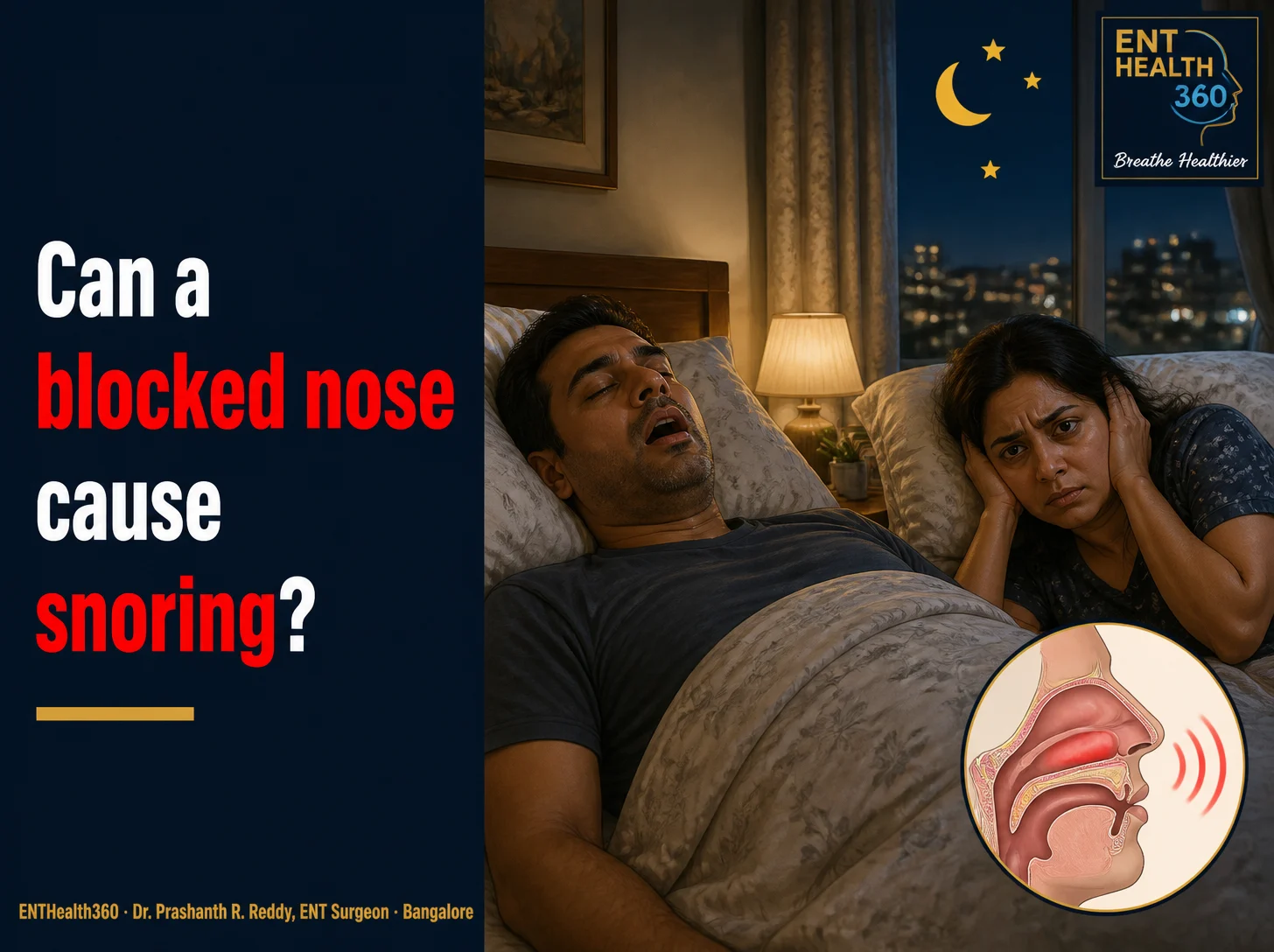
It can reduce snoring when the nose is the main narrow point, and it makes nose breathing and CPAP easier. On its own it rarely cures sleep apnea. See Can a blocked nose cause snoring?.
Is CPAP needed for life?
CPAP works while it is used. Some people need it less after significant weight loss or successful surgery, which is checked with a repeat sleep study.
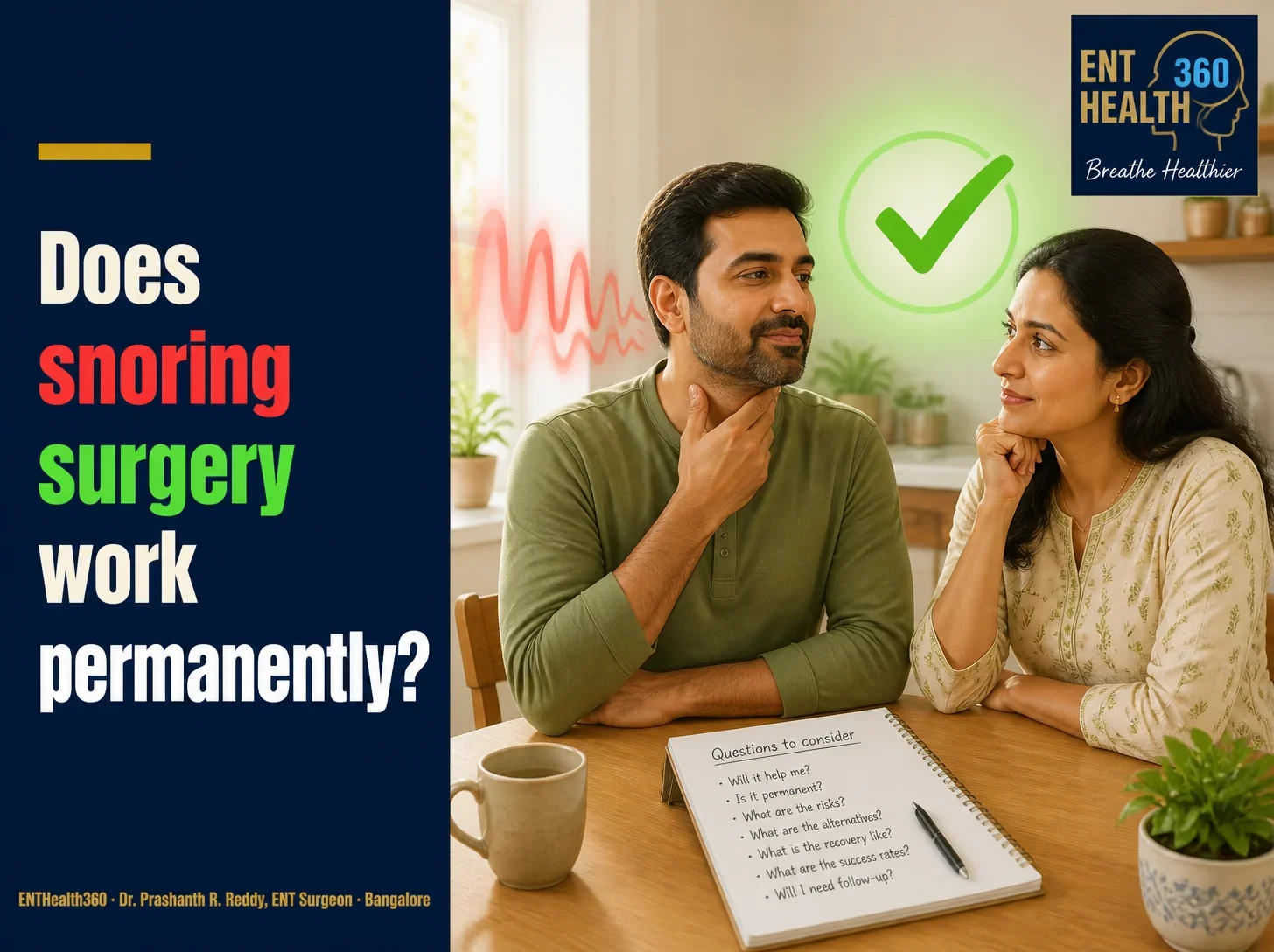
Is snoring surgery permanent?
Results depend on choosing the right site and on factors such as weight and age over time. Surgery is discussed only after a full evaluation.
References
- Patil SP, Ayappa IA, Caples SM, et al. Treatment of adult obstructive sleep apnea with positive airway pressure: an American Academy of Sleep Medicine clinical practice guideline. Journal of Clinical Sleep Medicine. 2019;15(2):335-343.
- Ramar K, Dort LC, Katz SG, et al. Clinical practice guideline for the treatment of obstructive sleep apnea and snoring with oral appliance therapy. Journal of Clinical Sleep Medicine. 2015;11(7):773-827.
- Kent D, Stanley J, Aurora RN, et al. Referral of adults with obstructive sleep apnea for surgical consultation: an American Academy of Sleep Medicine clinical practice guideline. Journal of Clinical Sleep Medicine. 2021;17(12):2499-2505.
- Ishii L, Roxbury C, Godoy A, Ishman S, Ishii M. Does nasal surgery improve OSA in patients with nasal obstruction and OSA? A meta-analysis. Otolaryngology–Head and Neck Surgery. 2015;153(3):326-333.
- Hudgel DW, Patel SR, Ahasic AM, et al. The role of weight management in the treatment of adult obstructive sleep apnea: an official American Thoracic Society clinical practice guideline. American Journal of Respiratory and Critical Care Medicine. 2018;198(6):e70-e87.
Related reading: CPAP vs snoring surgery · Snoring and sleep apnea surgery · Snoring or OSA: CPAP vs surgery · Is your nose the real reason behind your snoring?
About the author
Dr. Prashanth R. Reddy is a Senior Consultant ENT Surgeon in Bengaluru (MS ENT; Fellowship in Rhinoplasty, Seoul; MBA, IIM Bangalore) with over 20 years of practice. He sees patients at Sakra World Hospital, Marathahalli and at the ENTHealth360 clinic in Koramangala. His practice focuses on nasal causes of headache, snoring and sleep-disordered breathing.
For educational purposes only. Not a substitute for medical advice. Please consult a qualified ENT specialist.
General patient education. An individual consultation is needed to assess your symptoms and treatment options.