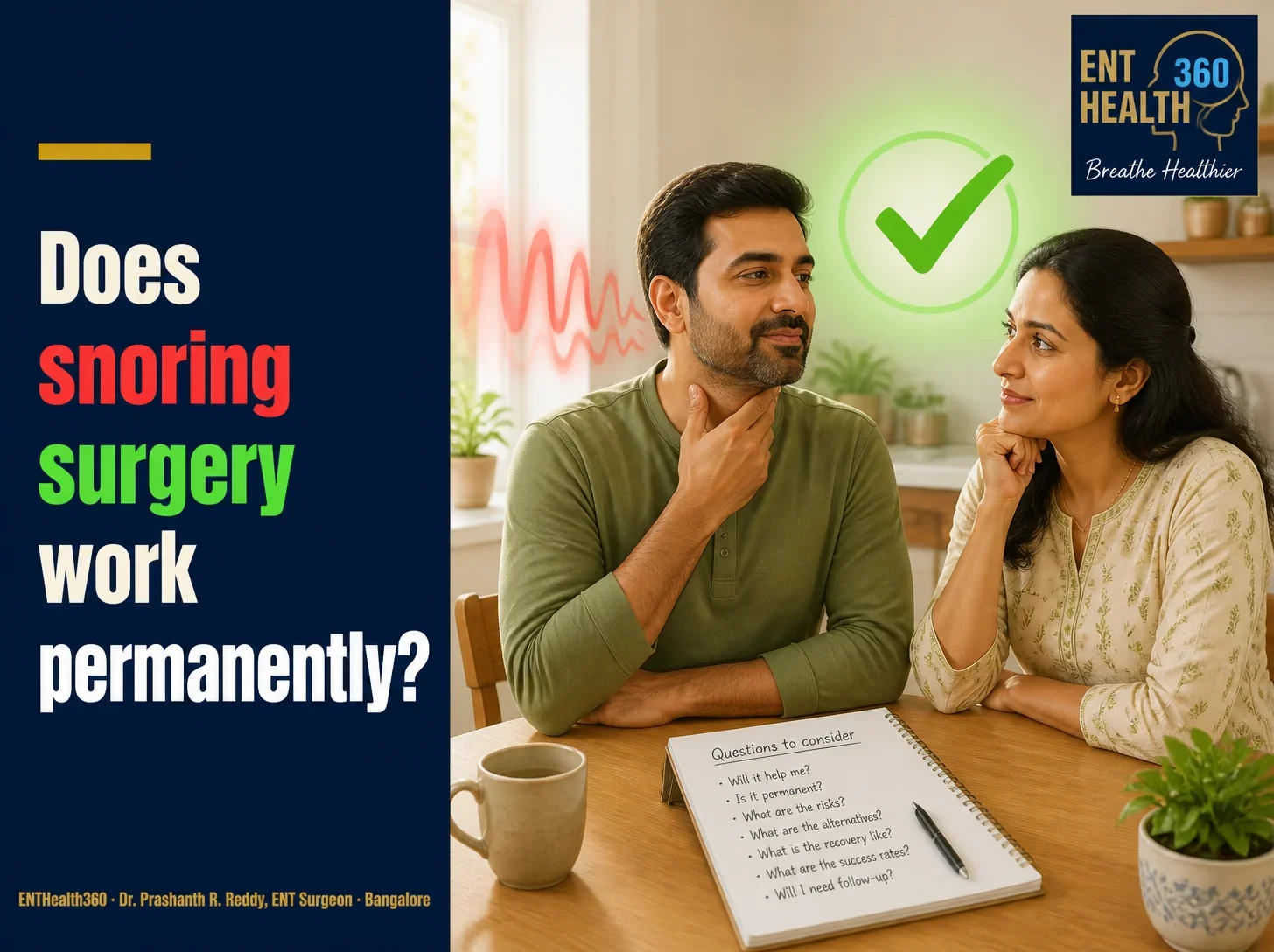
Does snoring surgery work permanently?
Snoring surgery can reduce snoring and sleep apnea in well-selected patients, but results vary and snoring can return with weight gain, ageing or alcohol.
THE NASAL MYSTERIES JOURNAL
Read about brain fog, concentration and daytime functioning in articles on sleep and breathing.
13 articles
Snoring surgery can reduce snoring and sleep apnea in well-selected patients, but results vary and snoring can return with weight gain, ageing or alcohol.
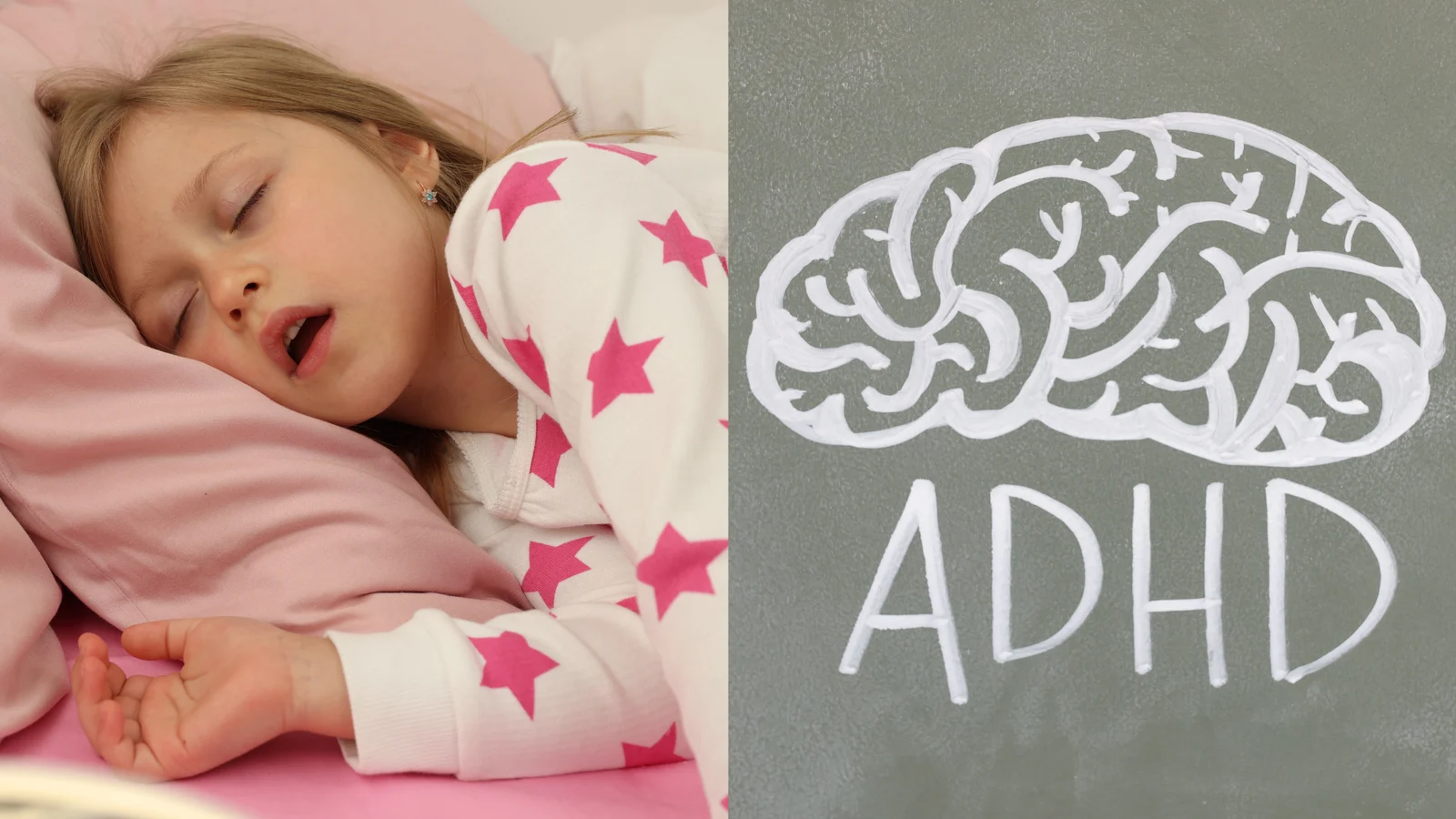
It can. Children who snore or mouth-breathe from enlarged adenoids, tonsils or allergy often sleep poorly, showing up as tiredness and poor focus in class.
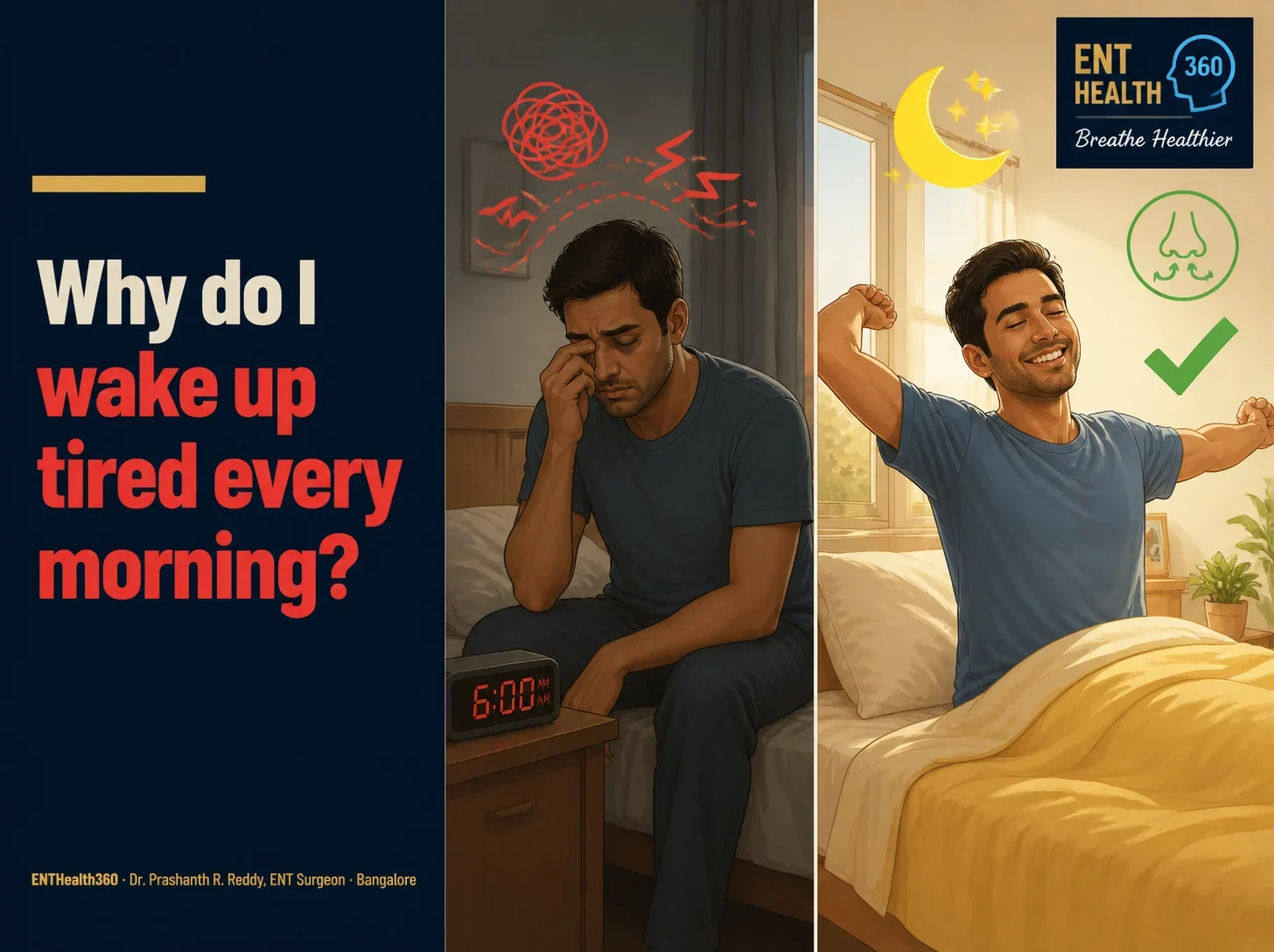
Tired after 8 hours in bed usually means poor sleep quality. Snoring, a blocked nose, sleep apnea, late screens, alcohol, thyroid or anaemia are common causes.
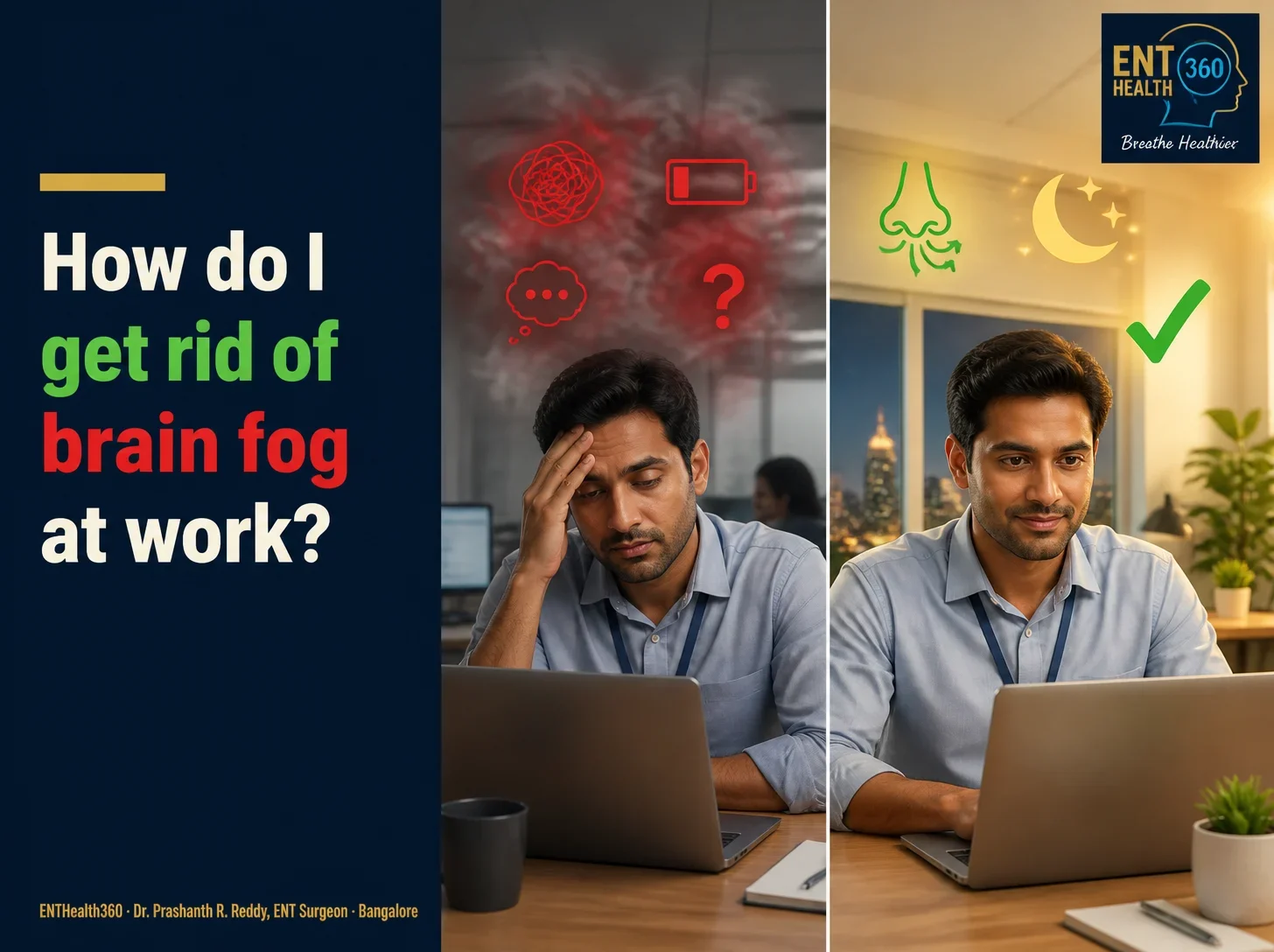
Brain fog at work is often linked to poor sleep, dehydration, skipped meals, stress and screen time, and sometimes to anaemia or thyroid problems.
Yes. Upper back teeth sit close to the cheek sinuses, so sinus inflammation can feel like toothache. Why it happens and when to see a dentist or an ENT.
Loud snoring often sends couples to separate rooms and leaves both tired. It can also signal sleep apnea, which is worth checking for the snorer's health.
Many people return to desk work within about a week of endoscopic sinus surgery. Crusting and congestion settle over a few weeks with saline rinses.
Waking tired with a dry mouth or headache can mean you breathe through your mouth at night. Common causes, from a blocked nose to sleep apnea.
How breathing, sleep, blood supply and nutrition connect with long-term brain health, and what the evidence does not establish about the nose and dementia.
How you breathe, through the nose or the mouth, affects sleep, focus and energy. An ENT explains why nasal breathing matters and how to protect it.
Attention problems, restlessness or poor sleep in a child can sometimes be linked to a blocked nose from enlarged adenoids. Signs and when to see an ENT.
Frequent snoring in children is often a red flag, linked to enlarged tonsils or adenoids, poor sleep, behaviour and growth. When to see an ENT.
Regular snoring can be a sign of deeper problems such as sleep apnea, affecting energy, health and relationships. When to get an ENT evaluation.