Written and medically reviewed by Dr. Prashanth R. Reddy, Senior Consultant ENT Surgeon (MS ENT) · Last updated: 19 November 2026
The Surprising Link Between Nose Blocks and Thumb Sucking in Children
By Dr. Prashanth R. Reddy | ENT & Endoscopic Sinus Surgeon, Bangalore
Is Thumb Sucking Just a Habit?
As a parent, thumb sucking can raise questions: 👉 “Is my child just comforting themselves?” 👉 “Are they hungry?” 👉 “Is this a sign of anxiety?”
But here’s something often overlooked:Persistent thumb sucking could be a sign of chronic nasal blockage.
🧐 Why Do Babies and Toddlers Suck Their Thumbs?
Thumb sucking is normal in infancy—it soothes, calms, and helps babies fall asleep. But when it persists beyond age 3 or 4 or becomes excessive, it’s time to ask why.
Often, children use the thumb to cope with invisible discomfort—like trouble breathing.
👃 How Nose Blocks Trigger Thumb Sucking
Here’s what typically happens:
🔹 Step 1: Nose Block → Mouth Breathing
Caused by allergies, colds, or enlarged adenoids.
🔹 Step 2: Mouth Breathing → Dry Mouth
The mouth lacks the natural humidifying effect of the nose.
🔹 Step 3: Dryness → Thumb Sucking
To soothe the dryness and discomfort, the child instinctively sucks their thumb, which helps:
- Stimulate saliva
- Calm the nervous system
- Feel more secure, especially at night
😢 It’s Not Just a Habit — It’s a Symptom
Thumb sucking might be your child’s unspoken message:“I can’t breathe properly.”
It often indicates:
- Chronic nasal obstruction
- Enlarged adenoids
- Allergies
- Sleep-disordered breathing
And until the breathing issue is addressed, the thumb sucking may continue—no matter what behavioral tricks you try.
💥 Why This Shouldn’t Be Ignored
Unresolved nasal blocks + prolonged thumb sucking can lead to:
- Misaligned teeth and jaw
- High-arched palate (roof of the mouth)
- Speech delays or lisp
- Poor sleep → irritability, fatigue, low focus
- Slowed growth due to disrupted deep sleep
✅ What You Can Do as a Parent
Watch for these signs:
- Your child is over 3 years old and still thumb sucking
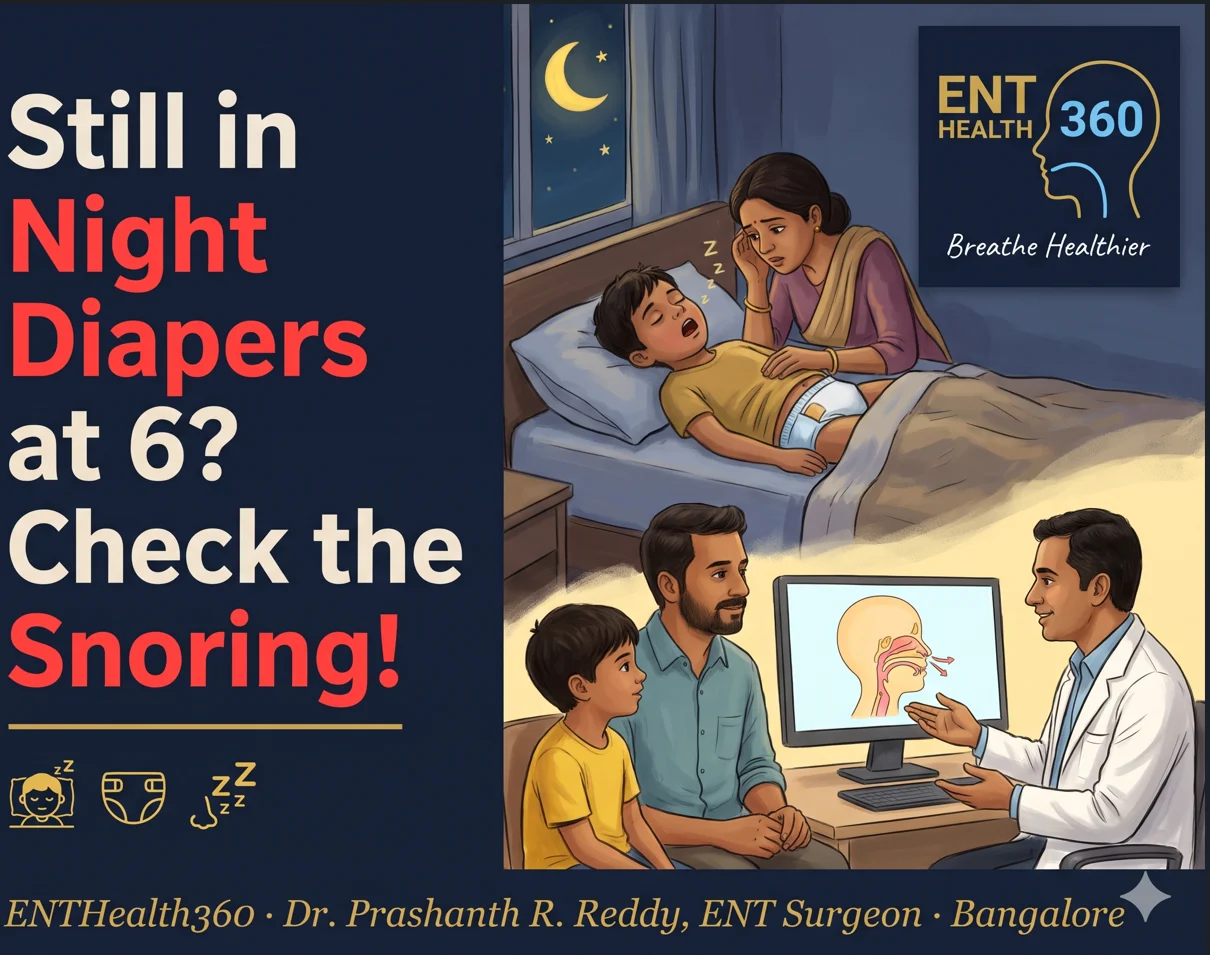
- Mouth breathing, snoring, or noisy sleep
- Looks tired despite “enough” sleep
- Frequent nasal congestion even when not sick
👉 These are red flags that the issue may be in the nose, not just the thumb.
🩺 How ENT Care Can Help
At our clinic, we help identify and treat the root causes of nasal obstruction:
- Endoscopic diagnosis of adenoids, nasal polyps, or allergic rhinitis
- Minimally invasive surgeries when required (like adenoidectomy)
- Medical management for allergies and sinus issues
- Guidance to break mouth breathing and restore healthy nasal habits
Once nasal airflow is restored, thumb sucking often disappears on its own. 💬 Final Takeaway
Thumb sucking isn’t always “just a phase.”It may be a subtle cry for help from a child who can’t breathe properly.
✨ By treating nasal blocks early, we can help children:
- Breathe better
- Sleep deeper
- Grow with healthier jaws, teeth, and speech development
Related guides: Snoring and sleep apnea surgery: evaluation and options · Symptom checklists: is it your nose?
Frequently asked questions
Can thumb sucking be a sign of a blocked nose? It can. A blocked nose from allergy, colds or enlarged adenoids makes a child breathe through the mouth, which dries it out. Sucking the thumb stimulates saliva and soothes the child, so persistent thumb sucking may point to a breathing problem.
When should I worry about my child's thumb sucking? Thumb sucking is normal in infancy. Consider an ENT check if your child is over three years old and still sucks the thumb, breathes through the mouth, snores or sleeps noisily, looks tired despite enough sleep, or has frequent nasal congestion even when not unwell.
What problems can long-term thumb sucking with a blocked nose cause? Unresolved nasal blockage with prolonged thumb sucking can lead to misaligned teeth and jaw, a high-arched palate, speech delays or a lisp, poor sleep with irritability and low focus, and slowed growth.
How does an ENT help? An ENT can identify enlarged adenoids, polyps or allergic rhinitis with an endoscopic examination, treat allergy and sinus problems with medicines, advise surgery such as adenoidectomy when required, and guide habits that restore nasal breathing.
See Dr. Prashanth R. Reddy in Bengaluru
Video or phone consultations are available if you live outside Bengaluru.
Call +91 821 788 4802 or +91 99026 05737 · Book online: enthealth360.com/book-appointment
General patient education. An individual consultation is needed to assess your symptoms and treatment options.